
Side Dishes
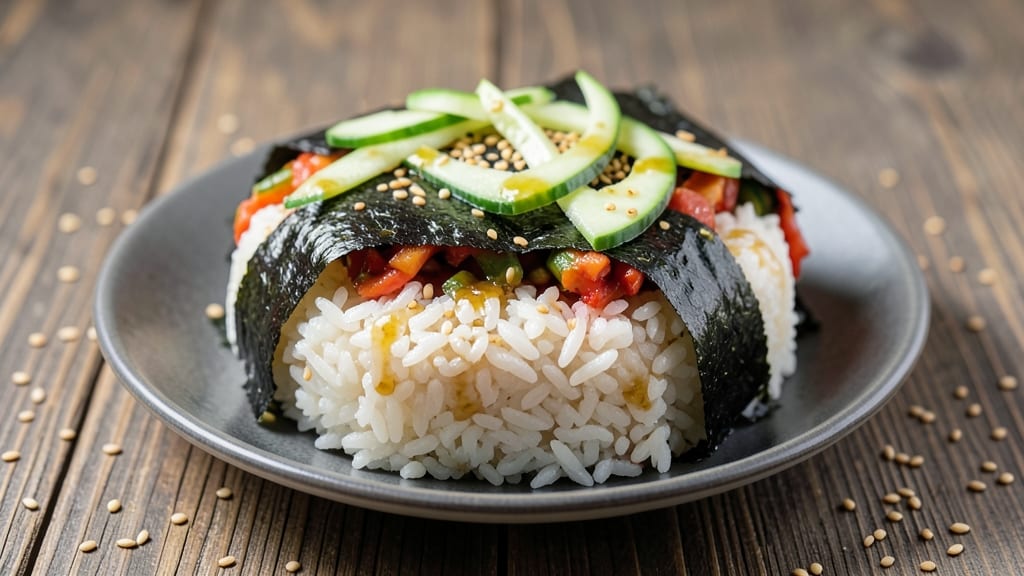
This vegetarian kimbap recipe transforms simple rice and nori into crispy, spicy-sweet rolls packed with kimchi, crunchy pickles, and vibrant vegetables—no meat required. The secret lies in layering ingredients precisely and using a thin rice spread to create that signature crunch.
I first discovered this version while adapting traditional kimbap for vegetarian friends, and it quickly became a staple in my meal prep rotation.
The beauty of kimbap is its adaptability—whether you're using store-bought kimchi or homemade pickled radish, the technique remains the same. Short-grain rice is seasoned with a touch of sesame oil for aroma, while fillings like cucumber, carrot, and avocado add freshness.
The key is slicing the roll at a slight angle for clean, bite-sized pieces that reveal the colorful layers inside.
What makes this recipe stand out is the balance of textures: tender rice, crispy pickles, and creamy avocado in every bite. The spicy kimchi cuts through the richness, while the sesame oil adds depth.
Perfect for lunchboxes, potlucks, or a quick weeknight dinner, these rolls stay fresh for days when wrapped tightly in plastic wrap.
For extra flair, sprinkle toasted sesame seeds on top before slicing or add a drizzle of gochujang-spiked mayo for heat. This vegetarian version proves kimbap can be just as satisfying—and delicious—as the original. Let’s get rolling!
Ingredients for kimbap rice
Short-grain rice, crispy nori, and vibrant vegetables create these perfect vegetarian kimbap rolls.
| Ingredient | Amount | Notes |
|---|---|---|
| Short-Grain White Rice 🍚 | 1 ½ cups | Uncooked, sushi-grade preferred |
| Kimchi 🥬 | 1 ½ cups | Store-bought or homemade, drained |
| Japanese Nori Sheets 🍣 | 8 whole | High-quality, 7-inch size |
| Sesame Oil 🫒 | 1 tbsp | Toasted, for rice seasoning |
| Rice Vinegar 🍶 | ½ cup | Seasoned preferred for flavor |
| English Cucumber 🥒 | 1 whole | Seeded, julienned into thin strips |
| Carrot 🥕 | 1 ½ cups | Julienned, medium size preferred |
| Avocado 🥑 | 1 whole | Ripe, sliced into thin strips |
| Kosher Salt 🧂 | 1 tsp | Diamond Crystal preferred |
| Toasted Sesame Seeds 🌾 | 2 tbsp | For garnish and texture |
| Pickled Red Onion 🧅 | ½ cup | Sliced thin, for crunch |
| Gochujang-Spiked Mayo 🍯 | ¼ cup | Optional, for dipping |
The short-grain rice is the foundation—sushi-grade absorbs seasonings better than long-grain varieties. For the best texture, rinse it thoroughly before cooking to remove excess starch. Sesame oil adds aroma, but don’t overdo it; 1 tablespoon is plenty for seasoning the rice. Diamond Crystal kosher salt enhances flavor without overpowering. If you can’t find sesame oil, toasted sesame oil from Trader Joe’s is a reliable alternative. The nori sheets should be stored in a cool, dry place to prevent brittleness—avoid refrigerating them unless absolutely necessary.
No kimchi on hand? Homemade quick-pickled radish works as a substitute—slice radishes thin, soak in rice vinegar with a pinch of salt and sugar for 30 minutes. For the pickled red onion, store-bought works, but homemade is fresher. Avocado should be ripe but firm—overripe slices turn mushy when wrapped. Carrots can be substituted with julienned daikon radish for a milder flavor. The gochujang-spiked mayo is optional but adds a tangy kick; mix 1 tablespoon gochujang with ¼ cup mayo for a perfect balance.
Assembled kimbap keeps best when wrapped tightly in plastic wrap and refrigerated for up to 3 days. For longer storage, freeze individual rolls in airtight containers for up to 1 month. To reheat, microwave for 20-30 seconds—just enough to warm the rice without drying it out. Slice at a 45-degree angle for clean, professional-looking pieces. The sesame seeds can be toasted fresh or sprinkled directly before slicing for extra crunch.
Why You'll Love This Recipe
- No-Cook Assembly: I swear by this—no stove, no fuss, just layering rice, kimchi, and nori like a puzzle. The only "cooking" is warming the rice in a bowl, and honestly? That’s the easiest part of my week.
- Umami Bomb: That first bite of crisp nori, tangy kimchi, and sticky rice? It’s like a flavor party in your mouth. The sesame oil drizzle ties it all together—simple, but ridiculously satisfying.
- Lunchbox Legend: Between us, this is my go-to for packed lunches. No soggy sandwiches here—it holds up for hours, and my kids actually finish it. (Yes, even on a Tuesday night.)
- Budget Meal Magic: Rice and kimchi stretch forever, and nori sheets last ages. I make a batch on Sundays, and suddenly I’ve got dinners, snacks, and leftovers that taste fresh every time. Minimal cost, maximum flavor.
Step-by-step instructions for korean kimchi kimbap
Assemble these vibrant rolls with precision—each layer contributes to the perfect balance of texture and flavor.
Prepare the Short-Grain White Rice
Rinse the 1.5 cups short-grain white rice thoroughly in a fine-mesh strainer under cold water until the water runs clear. This removes excess starch that would make the rice gummy. Drain well and transfer the rice to a pot with 2 cups water and the 1 tsp kosher salt. Bring to a boil over high heat, then reduce to a simmer and cook for 15 minutes without lifting the lid.
Turn off the heat and let the rice steam, covered, for 10 minutes. Fluff gently with a fork, then stir in the 1 tbsp sesame oil and 0.5 cup rice vinegar. The rice should be slightly sticky but not wet—this is essential for roll integrity. Spread the seasoned rice evenly on a bamboo steamer or large plate to cool completely before assembling. Warm rice sticks together better, but cooled rice prevents soggy nori sheets.
Julienne and Layer the Vegetables
Using a mandoline or sharp knife, julienne the 1 whole english cucumber and 1.5 cups carrot into thin, even strips—about 1/8-inch thick. Slice the 1 whole avocado into thin strips and set aside. Drain the 1.5 cups kimchi thoroughly to remove excess liquid, then pat dry with paper towels. Thinly slice the 0.5 cup pickled red onion if not already pre-sliced.
Arrange the vegetables in this order on a flat surface: cucumber, carrot, avocado, and kimchi. Keep the pickled red onion separate for the final garnish. The vegetables should form a continuous strip about 12 inches long—this ensures even distribution when rolling. Press down gently to create a compact layer, as this prevents gaps in your rolls.
Assemble the Rolls with Precision
Lay one japanese nori sheet shiny-side down on a bamboo rolling mat. Spread 1/4 cup of the prepared rice evenly over the nori, leaving a 1-inch border at the top. The rice should cover the nori completely but not extend beyond the edges. Press down firmly to create a smooth, even layer—this prevents tearing when rolling.
Place the prepared vegetable strip horizontally, about 1 inch below the top border of the nori. Fold the bottom edge of the mat over the vegetables, then tightly roll the mat toward you using even pressure. The vegetables should be fully encased in rice, with no gaps. Repeat with remaining nori sheets and rice, keeping rolls uniform in size for even cooking.
Slice and Garnish for Presentation
Using a sharp, wet knife, slice each roll into 6 equal pieces—about 1/2-inch thick. Wipe the knife between cuts to prevent sticking. Arrange the pieces on a serving platter, seam-side down. Sprinkle evenly with 2 tbsp toasted sesame seeds and the reserved 0.5 cup pickled red onion. The seeds add texture, while the onion provides a bright contrast to the rich kimchi and creamy avocado.
Serve immediately with the 0.25 cup gochujang-spiked mayo on the side for dipping. The rolls should hold their shape with crisp edges from the nori and a satisfying crunch from the julienned vegetables. Each bite should deliver a harmonious blend of spicy kimchi, buttery avocado, and the subtle sweetness of the carrots—all bound together by the perfectly seasoned rice.
Pro Tips For Making Kimbap Rice
- Spread Rice Thin: DESCRIPTION: A ¼-inch layer is your goal—thicker means soggy nori later. I used to eyeball it and end up with a rice avalanche; now I use the back of a spoon to scrape off excess after the first spread. Less rice = crispier rolls that hold together.
- Prep Kimchi Right: DESCRIPTION: Drain and squeeze kimchi dry with a clean towel—no one wants a watery, mushy roll. I learned this the hard way when my first batch unraveled by lunch. Also, chop it into small pieces; big chunks tear the nori like a drunk person at a sushi bar.
- Toast Nori Quickly: DESCRIPTION: Heat the nori sheet over a gas flame (or under a broiler) for 10 seconds per side—just until it’s fragrant and slightly crisp. Overdoing it turns it brittle; underdoing it makes it limp. A paper towel over your hand keeps you from burning your fingers while pressing.
- Seal Edges Fast: DESCRIPTION: Wet your fingers with water and press the nori edges immediately after rolling—this locks in moisture and prevents unraveling. I used to skip this and watch my kimbap fall apart by the second cut. A damp pastry brush works too if you’re fancy.
Troubleshooting perfect results
Rice Too Sticky
If your rice is clumping together too much after cooking, you likely didn’t rinse it enough before cooking. Short-grain rice needs thorough rinsing to remove excess starch—rinse until the water runs clear (usually 5-6 minutes).
For extra control, spread the rice on a bamboo steamer while cooling to prevent sticking. If it’s already cooked too sticky, mix in ½ tsp additional rice vinegar to help firm it up slightly. 💡
Nori Sheets Cracking
Nori tears when the rice layer isn’t even or too thick. Use ¼ cup rice per sheet and press firmly to create a smooth, ¼-inch-thick layer. Keep your rolling mat tightly wrapped around the fillings—start rolling from the bottom edge and apply even pressure to prevent gaps.
If nori still cracks, try slightly dampening your fingers before handling to reduce friction. 🍣
Vegetables Too Watery
Soggy fillings ruin the texture of your kimbap. Drain kimchi thoroughly and pat all vegetables very dry with paper towels before assembling. For cucumbers and carrots, squeeze them gently in a clean towel to remove excess moisture.
If using avocado, slice it right before rolling to prevent browning. For extra insurance, sprinkle ¼ tsp kosher salt over the vegetable layer to draw out moisture. 🥒
Rolls Falling Apart
Uneven rolling or insufficient rice causes disintegration. Always use freshly cooled rice—warm rice sticks together but makes nori soggy. Press the rice layer firmly before adding fillings, and roll tightly from the bottom up.
If rolls still fall apart, try wrapping them in plastic wrap for 30 minutes after slicing to help them hold shape. For extra stability, use slightly less rice (about ⅓ cup per sheet) to create a tighter seal. 🔄
Kimchi Too Spicy
If the heat from kimchi overpowers your roll, balance it with milder fillings. Add extra cucumber or avocado to cool the spice. For the rice, increase the rice vinegar to ⅓ cup—its acidity helps mellow the heat.
You can also rinse the kimchi briefly before draining to reduce spice intensity. For a smoother flavor, mix in 1 tsp honey with the kimchi before assembling. 🌶️
Slicing Unevenly
Uneven slices happen when the knife isn’t sharp or the roll isn’t firm. Use a very sharp knife (I recommend a slicing knife like the Victorinox Fibrox) and wet it between cuts to prevent sticking.
Slice at a 45-degree angle for clean pieces, and press gently but firmly through the roll. If the roll is too soft, chill it in the fridge for 15-20 minutes before slicing to firm up the structure. 💪
Nutrition facts
Frequently asked questions
Can I make kimbap without nori sheets?
While nori gives kimbap its signature crispy texture and umami flavor, you can substitute with large lettuce leaves (like romaine or butter lettuce) or rice paper wrappers for a different texture. For a closer match, toast the lettuce leaves briefly in a dry pan to add crispness. The rolls will be softer but still delicious!
How do I store leftover kimbap?
Wrap individual rolls tightly in plastic wrap or place them in an airtight container to maintain freshness. Store in the fridge for up to 3 days or freeze for 1 month. To reheat, microwave for 20-30 seconds—just enough to warm the rice without drying it out.
What’s the best way to slice kimbap for presentation?
Use a sharp, wet knife and slice at a 45-degree angle for clean, bite-sized pieces. Wipe the knife between cuts to prevent sticking. For extra flair, arrange slices seam-side down on a platter and garnish with sesame seeds and pickled onions.
Can I make kimbap ahead of time?
Assemble the rolls up to 24 hours ahead and refrigerate unwrapped. The flavors meld beautifully overnight. For best texture, slice just before serving. If freezing, wrap each roll individually in plastic wrap and place in a freezer bag for up to 1 month. Thaw in the fridge before slicing.
What if I don’t have a bamboo rolling mat?
No problem! Use a clean kitchen towel or parchment paper as a substitute. For extra grip, dampen your fingers slightly to prevent the nori from sticking. A long, flat cutting board also works well—just make sure it’s large enough to handle the roll’s length.