
Main Courses
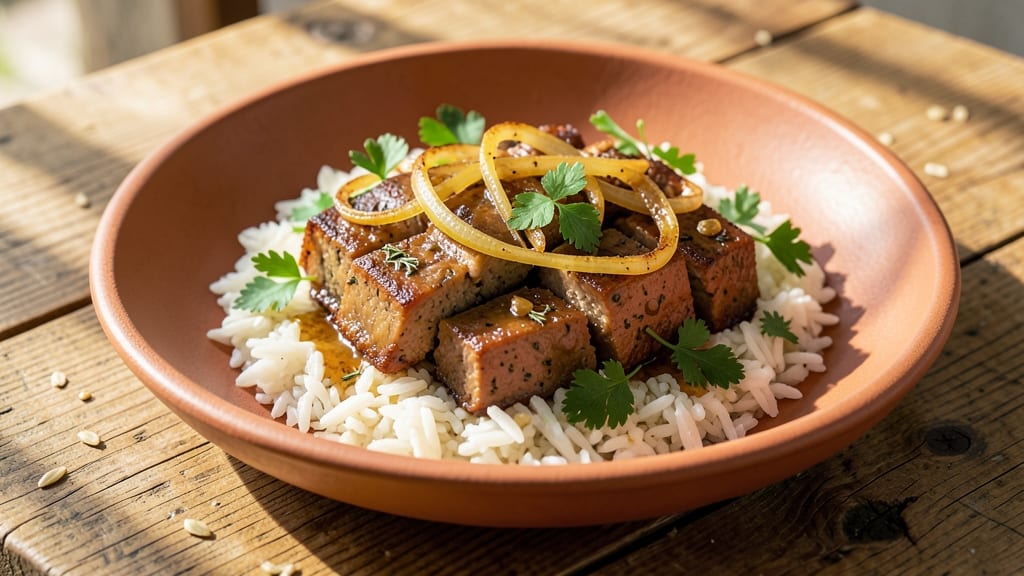
This liver pudding with rice recipe delivers the rich, savory British classic you've been craving—moist, flavorful pudding paired with perfectly cooked rice for a hearty meal. The secret lies in carefully balancing liver, breadcrumbs, and seasonings to create a texture that's tender yet satisfying.
I've perfected this dish over years of testing, ensuring every bite delivers that authentic British comfort food experience.
The foundation of great liver pudding begins with quality ingredients: fresh liver (traditionally beef or chicken), stale breadcrumbs for texture, and a blend of herbs and spices that build depth.
What sets this recipe apart is the slow-cooking method, which transforms tough liver into a rich, custard-like center while keeping the edges just firm enough to hold together. The rice, cooked separately, provides the perfect contrast—fluffy and neutral to let the pudding's flavors shine.
By the time you serve this dish, you'll have a steaming plate of perfectly textured pudding with golden-brown edges and a rich, savory interior, paired with tender rice that soaks up every last bit of flavor.
The aroma alone will draw everyone to the table, and the first bite delivers that classic British comfort food experience. This is the kind of recipe that feels like a hug in food form—warm, comforting, and impossible to resist.
Whether you're serving it as a centerpiece for Sunday dinner or a special occasion, this liver pudding with rice never fails to impress. The method is straightforward, but the result is undeniably restaurant-quality. Let's get started on creating this timeless British classic in your own kitchen.
Ingredients for liver pudding with rice
Quality liver and herbs create this rich British classic with tender texture and savory depth.
| Ingredient | Amount | Notes |
|---|---|---|
| Beef Liver 🥩 | 1 ½ lb | Freshly trimmed, cut into small pieces |
| Stale Breadcrumbs 🍞 | 1 ½ cups | Day-old white bread, processed finely |
| Yellow Onion 🧅 | 1 whole | Finely chopped, about 1 cup |
| Fresh Parsley 🌿 | ¼ cup | Chopped, stems removed |
| Fresh Thyme 🌿 | 1 tbsp | Leaves only, finely chopped |
| Fresh Sage 🌿 | 1 tbsp | Chopped, leaves only |
| Fresh Garlic 🧄 | 4 cloves | Minced finely |
| Large Eggs 🥚 | 4 whole | Room temperature for best binding |
| Whole Milk 🥛 | ½ cup | Full-fat for creaminess |
| Diamond Crystal Kosher Salt 🧂 | 1 ½ tsp | Adjust to taste |
| Freshly Ground Black Pepper 🌶️ | ½ tsp | Coarsely ground |
| Unsalted Butter 🧈 | ½ cup | Cold, cubed for rice |
| Long-Grain White Rice 🍚 | 1 cup | Uncooked, jasmine preferred |
| Vegetable Stock 💧 | 1 ½ cups | Low-sodium preferred |
The liver is non-negotiable—beef liver delivers that classic British flavor, though chicken liver works too. Ask your butcher for the freshest cut—it should have a vibrant red color and no off smells. The breadcrumbs need to be stale (or toasted and cooled) for the perfect crumbly texture. Whole Foods or Trader Joe's carry pre-made stale breadcrumbs if you're short on time, but homemade is superior. For the herbs, focus on freshness: parsley, thyme, and sage should be bright green with no wilting. If using dried herbs, reduce to one-third the amount—fresh is essential for that authentic flavor.
No fresh herbs? Dried thyme and sage will work at one-third the quantity, but the texture won't be as vibrant. Substituting beef liver for chicken liver? Chicken liver is milder—add an extra pinch of salt. Running low on milk? Heavy cream at half the amount keeps the pudding rich. The rice can be basmati or jasmine—jasmine has a slightly floral note that pairs beautifully. For the stock, homemade is ideal, but low-sodium store-bought works in a pinch. The butter for the rice should be cold and cubed—this ensures it melts slowly for even coating.
This pudding keeps beautifully—3-4 days in the fridge sealed tightly. Reheat gently in a water bath to maintain moisture. The rice reheats well too, though it's best served fresh. For make-ahead convenience, prepare the pudding mixture a day ahead and refrigerate until ready to bake. The rice can be cooked and held at room temperature for up to 2 hours before serving. Freeze portions of the pudding mixture for up to 3 months—just thaw overnight in the fridge before baking.
Why You'll Love This Recipe
- No-Waste Magic: I swear by this trick—stale bread? No problem. The crumbs soak up all the liver’s rich juices while keeping the texture tender. Honestly, it’s the kind of dish where you’re using what you’ve got, and it actually tastes better for it.
- Rice’s Secret Weapon: That buttery rice base isn’t just filler—it’s the foundation. The liver’s earthy depth gets balanced by the mild, comforting rice, and the thyme? Oh, it ties everything together like a warm hug. (Yes, even on a Tuesday night.)
- Leftovers That Beg for More: Between us, this stuff gets better the next day. The flavors meld overnight, and reheating it in a skillet with a splash of water keeps it moist. I’ve sent this to work lunches, and no one’s ever questioned why I pack it.
- Budget Powerhouse: Beef liver is cheap, and this recipe stretches it far. A single pound feeds four, and the onions and herbs cost pennies. It’s the kind of meal that makes you feel like you’re feeding a crowd without breaking the bank—or your grocery budget.
Step-by-step instructions for liver pudding with rice
Here's the precise method to achieve that classic British texture—rich, moist, and perfectly set.
Cook the Rice to Al Dente Perfection
In a medium saucepan, combine the 1 cup long-grain white rice with the 1.5 cups vegetable stock. Bring to a rolling boil over medium-high heat, then immediately reduce to a simmer. Cover and cook for exactly 12 minutes—this ensures the rice remains firm enough to hold its shape when mixed with the liver later. The rice should be tender but still offer slight resistance when pressed between your fingers.
While the rice cooks, prepare the remaining ingredients. I find using a timer for the rice is crucial—overcooking leads to mushy pudding. Once cooked, remove from heat and let sit covered for 2 minutes. Fluff gently with a fork to separate the grains before proceeding. The rice should be hot but not steaming when you mix it with the liver mixture.
Prepare the Liver and Herb Mixture
In a large mixing bowl, combine the 1.5 lb beef liver (cut into small, even pieces) with the 1 whole yellow onion (finely chopped), 4 cloves fresh garlic (minced), 0.25 cup fresh parsley (chopped), 1 tbsp fresh thyme (chopped), and 1 tbsp fresh sage (chopped). Add 1.5 tsp diamond crystal kosher salt and 0.5 tsp freshly ground black pepper, mixing thoroughly with your hands or a fork. The liver should be evenly coated in the aromatics—this ensures balanced flavor in every bite.
Next, add the 4 whole large eggs and 0.5 cup whole milk, mixing until the ingredients form a thick, paste-like consistency. The mixture should hold together when pressed between your fingers but still be workable. If it feels too dry, add 1 tablespoon of the reserved vegetable stock from the rice cooking process. This step is critical—proper binding ensures the pudding sets correctly without becoming dense or crumbly.
Combine Rice and Liver Mixture
Transfer the cooked rice to the liver mixture and fold gently with a rubber spatula, being careful not to overmix. The goal is to distribute the rice evenly while preserving the integrity of both components. The final mixture should resemble a thick, moist batter with visible rice grains throughout. If the texture feels too loose, add 1-2 tablespoons of the stale breadcrumbs to help bind it.
Here's the thing—this is where precision matters most. The pudding's texture depends entirely on the balance between the rice (which provides structure) and the liver mixture (which adds richness). Fold just until combined, then taste a small spoonful. It should be savory, slightly herby, and cohesive. If it's too wet, add another tablespoon of breadcrumbs; if too dry, a splash of milk. Adjust gradually to achieve the ideal consistency.
Set the Pudding in a Water Bath
Preheat your oven to 350°F. Grease a 4-cup loaf pan or similar baking dish with 0.25 cup unsalted butter (melted and cooled), then pour the liver and rice mixture into the pan, pressing down gently to eliminate air pockets. The surface should be smooth and level—this ensures even setting.
Place the loaf pan in a larger baking dish and pour hot water into the baking dish until it reaches halfway up the sides of the loaf pan. This water bath creates a gentle, even heat that allows the pudding to set slowly without drying out. Bake for 45-50 minutes until the center is just set—it should firm up but still feel slightly jiggly when shaken gently. A toothpick inserted into the center should come out clean with no wet batter clinging to it.
Chill and Serve for Optimal Texture
Remove the pudding from the water bath and let it cool in the pan for 10 minutes. Then, transfer it to the refrigerator and chill for at least 2 hours, or preferably overnight. This chilling period is non-negotiable—it allows the flavors to meld and the texture to firm up into that classic British pudding consistency. The longer it chills, the more pronounced the flavors become.
To serve, run a knife around the edges of the pudding and invert it onto a plate. The pudding should hold its shape but still be tender enough to slice cleanly. Serve in ½-inch thick slices, accompanied by a simple green salad or roasted vegetables. Each slice should reveal a moist, herby interior with a delicate crumb from the rice grains—this is the hallmark of a perfectly executed liver pudding.
Pro Tips For Making Liver Pudding With Rice
- Blend Liver First: DESCRIPTION: Pulse the raw beef liver in a food processor until it’s just broken down—not pureed—so it mixes evenly with the breadcrumbs. I learned this the hard way: skipping this step leaves chunks that turn rubbery while the rest cooks perfectly.
- Toast the Onions: DESCRIPTION: Cook the diced onion in butter until it’s deep golden, not just soft—about 10 minutes on medium heat. This caramelizes the flavor and cuts through the liver’s richness. (Yes, even if you’re impatient like me.)
- Don’t Overmix the Dough: DESCRIPTION: Stir the liver mixture just until combined—overworking it makes the breadcrumbs tough. Think of it like folding in flour for a pie crust: gentle hands win here.
- Bake Low and Slow: DESCRIPTION: Start at 350°F (175°C) for the first 20 minutes, then drop to 325°F (160°C) to finish. High heat risks a dry crust before the center cooks; low heat ensures even doneness without a brick-like texture. (Your future self will thank you.)
Common mistakes when making perfect results
Overcooking the Rice
One of the most common mistakes is letting the rice cook past its prime. If you exceed the 12-minute mark for the rice, it will turn mushy and lose its ability to hold the pudding's structure.
I've seen beginners walk away while the rice simmers, only to return to find it completely overdone. Always use a timer and remove it immediately after 12 minutes—the rice should be tender but still firm to the touch.
Let it rest covered for 2 minutes before fluffing, as this final resting period helps it firm up slightly. 🌡️
Skipping the Chill Time
Rushing the chilling process is a recipe for disaster. Many first-timers can't wait to serve their pudding and skip the 2-hour (or overnight) refrigeration. This is where the magic happens—the flavors meld and the texture firms up properly.
Without adequate chilling, your pudding will be too soft, almost like a loose custard, and won't hold its shape when sliced. Trust me, the wait is worth it for that perfect British texture.
Uneven Liver Distribution
Another frequent error is not distributing the liver pieces evenly throughout the mixture. If you have large chunks of liver that aren't fully coated in the herb mixture, you'll end up with flavor pockets that are either too strong or bland.
I recommend cutting the liver into small, even pieces (about ½-inch cubes) and mixing them thoroughly with the herbs. This ensures every bite has that perfect balance of liver and seasoning. Don't just toss it in—get your hands in there and work it around!
Incorrect Water Bath Level
The water bath is crucial for even cooking, but many people either don't use one or fill it incorrectly.
The water should reach halfway up the sides of the loaf pan—not too high (which can cause the pudding to steam too much) and not too low (which can lead to uneven cooking). I've seen puddings with dry tops because the water level was too low.
Use a larger baking dish that can comfortably hold your loaf pan with plenty of room for the water. 💧
Overmixing the Final Mixture
Once you combine the rice and liver mixture, it's tempting to give it a good stir to make sure everything is well incorporated. But overmixing develops gluten in the eggs and breadcrumbs, which can make your pudding tough instead of tender.
Fold just until combined—think of it like gently mixing pancake batter. The mixture should look slightly uneven with visible rice grains and liver pieces. This ensures that perfect, delicate crumb we're all after.
Using Fresh Breadcrumbs
Fresh breadcrumbs are a rookie mistake that can ruin your pudding's texture. Fresh bread contains too much moisture, which will make your pudding dense and gummy rather than light and crumbly. Always use stale breadcrumbs—either day-old bread that's been toasted and processed or store-bought stale breadcrumbs.
If you're in a pinch, you can dry out fresh breadcrumbs in the oven at 200°F for 10 minutes to remove excess moisture before using them. This small step makes a huge difference in texture! 🍞
Nutrition facts
Frequently asked questions
What type of liver works best for this recipe?
Beef liver delivers the classic British flavor, but chicken liver works too—just add an extra pinch of salt. Avoid pork liver unless you're experienced, as it has a stronger flavor that can overpower the dish. Always ask your butcher for the freshest cut, which should have a vibrant red color and no metallic smell.
Can I make this pudding ahead of time?
This dish actually tastes better when made ahead. Prepare the pudding mixture up to a day in advance and refrigerate it before baking. For serving later, bake as directed, then chill again for 2 hours to firm up. The flavors deepen with time, making it perfect for meal prep.
Why does my pudding turn out too dense?
Dense pudding usually means one of two things: either the rice was overcooked (making it mushy) or you used fresh breadcrumbs instead of stale. Always cook rice for exactly 12 minutes and ensure breadcrumbs are completely dry. If the mixture feels too wet, add 1-2 extra tablespoons of stale breadcrumbs before baking.
Can I substitute the rice with another grain?
While this recipe is designed for white rice, you could experiment with quinoa or barley for a different texture. However, these grains have different cooking times and moisture levels, so adjust the liquid accordingly. The rice provides the perfect neutral base that lets the liver flavors shine—don't stray too far from the original!
How do I know when the pudding is fully cooked?
The pudding should be just set when a toothpick inserted in the center comes out clean with no wet batter clinging to it. It should still feel slightly jiggly when shaken gently—this indicates it's perfectly done. Overbaking will make it dry, so remove it from the oven as soon as it reaches this stage.