
Desserts
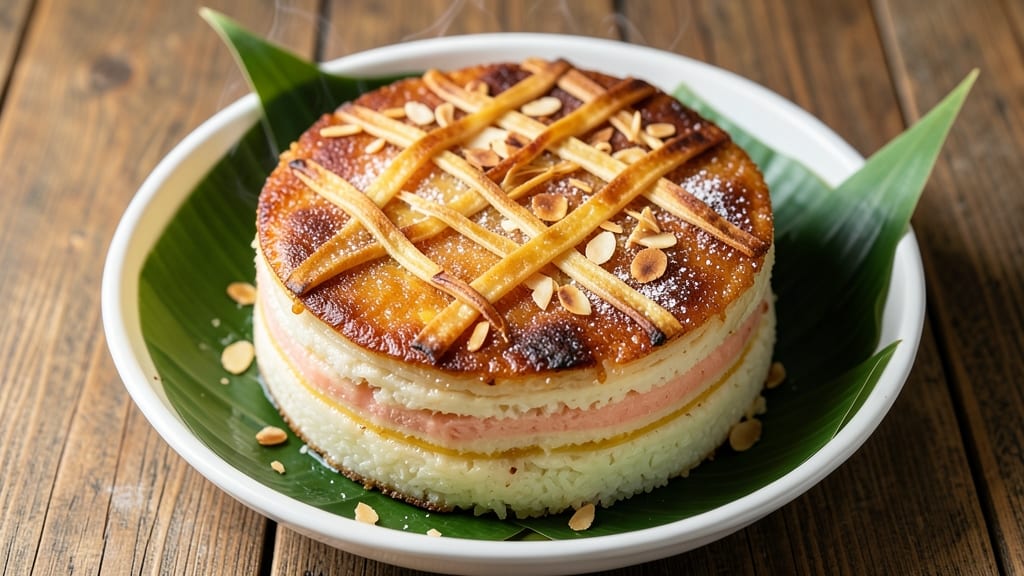
This Malaysian steamed rice cake recipe captures the delicate, aromatic essence of festive desserts—soft, slightly chewy, and infused with coconut milk and pandan leaf. The secret lies in precise steaming and a balance of sweetness that makes every bite taste like a celebration.
I've perfected this recipe after years of testing, ensuring the texture stays tender yet holds its shape beautifully.
What sets this recipe apart is the authentic technique of wrapping the rice cake in banana leaves before steaming, which imparts a subtle herbal aroma while keeping the cake moist.
The pandan extract and coconut milk create that signature floral-coconut flavor profile, while the touch of palm sugar adds just the right sweetness without overpowering. This is the dessert that brings warmth to gatherings and makes every occasion feel special.
By the time you're done, you'll have golden, fragrant rice cakes that are perfect for festive occasions or as a sweet treat any time. The texture is light yet satisfying, with just the right amount of chewiness that makes it irresistible.
Serve warm with a drizzle of palm sugar syrup or enjoy at room temperature for a dessert that feels both indulgent and balanced.
This recipe works beautifully for special occasions like Eid or Chinese New Year, but it's also perfect for everyday cravings. The process is straightforward once you understand the key steps, and the result is a dessert that will impress even the most discerning guests.
Let's get started on creating this fragrant delight.
Ingredients for malaysian steamed rice cake
Twelve ingredients transform into fragrant, tender rice cakes with coconut-pandan magic.
| Ingredient | Amount | Notes |
|---|---|---|
| Glutinous Rice Flour 🍚 | 2 cups | High-quality, fine grind preferred |
| Coconut Milk (Full-Fat) 🥥 | 1 ½ cups | Canned, unsweetened preferred |
| Pandan Extract 🌿 | 1 tbsp | Pure, green food coloring free |
| Palm Sugar 🍯 | ½ cup | Finely ground, light brown color |
| Unsalted Butter 🧈 | ¼ cup | Cold, cubed for texture |
| Fresh Pandan Leaves 🍃 | 2 whole | Tender stems only, no tough parts |
| Large Eggs 🥚 | 2 whole | Room temperature for blending |
| Banana Leaves 🌿 | 4 whole | Fresh or frozen, thawed |
| Water 💧 | ½ cup | Room temperature |
| Salt 🧂 | ½ tsp | Fine sea salt preferred |
| Vanilla Extract 🌸 | ½ tsp | Pure, high-quality preferred |
| Sesame Seeds 🌰 | 2 tbsp | Toasted for garnish |
The glutinous rice flour is non-negotiable—it gives that signature chewy texture. Bob's Red Mill or Thai Kitchen brands are reliable, but check for 100% rice flour with no fillers. Fresh pandan leaves are ideal, but Asian markets often sell frozen bundles that work just as well. Palm sugar is the secret to authentic sweetness—skip the white sugar substitutes. The butter adds richness, so use full-fat, unsalted for best results. For banana leaves, look for fresh, vibrant green ones at specialty stores or the produce section of larger grocery chains.
No pandan leaves? Pandan extract is the next best thing—just ensure it's pure with no artificial colors. Running short on coconut milk? Full-fat canned coconut milk works best, but light versions will make the cakes less tender. Substituting palm sugar? Brown sugar at half the amount works, but the flavor won't be identical. The eggs bind the mixture, so don't overmix—just blend until smooth. For a nutty finish, toast the sesame seeds in a dry pan until golden. If you can't find banana leaves, parchment paper works in a pinch, though the aroma won't be the same.
Freshly made rice cakes keep for 3 days in the fridge, wrapped tightly in plastic. For longer storage, freeze them for up to 3 months—steam from frozen for best texture. Reheat gently in a steamer or microwave with a damp paper towel. These cakes reheat beautifully, making them perfect for meal prep. Serve warm with a drizzle of coconut milk or a sprinkle of toasted sesame seeds for that restaurant-quality finish.
Why You'll Love This Recipe
- No Fuss, One Bowl: I swear by this recipe because it’s literally one bowl—just mix, steam, done. No fancy layers, no tricky folding like those delicate kueh layers. The glutinous rice flour and coconut milk blend into a smooth batter that steams into golden perfection without a single mess.
- Pandan Perfection: That first whiff of pandan extract? Chef’s kiss. It’s floral, sweet, and just a hint of vanilla—like a tropical hug in every bite. The palm sugar caramelizes beautifully, balancing the richness of the coconut milk and butter, so it’s never cloying, just ridiculously satisfying.
- Meal Prep Magic: Here’s what sold me—these cakes reheat like a dream. I make a batch on Sundays, slice them up, and they stay tender for days. Pack them for lunch, serve them at gatherings, or just grab one straight from the fridge. No soggy textures, just pure convenience.
- Budget-Friendly Luxury: Between us, this recipe is my secret weapon for feeling fancy without breaking the bank. Glutinous rice flour and coconut milk stretch far, and a little pandan extract goes a long way. The butter makes it feel indulgent, but the cost? A steal compared to store-bought versions.
Step-by-step instructions for Malaysian steamed rice cake
Here's the method for creating these fragrant, melt-in-your-mouth rice cakes with perfect texture.
Prepare the Batter with Glutinous Rice Flour
In a large mixing bowl, combine the 2 cups of glutinous rice flour with the 0.5 tsp salt. Create a well in the center and add the 2 whole large eggs, 1.5 cups coconut milk (full-fat), 0.5 cup water, 0.5 tsp vanilla extract, and 1 tbsp pandan extract. Using a whisk or rubber spatula, gently mix until just combined—you'll want to avoid developing gluten in the flour.
The batter should be thick but pourable, similar to pancake batter. If it's too thick, add 1-2 tablespoons of water at a time until it reaches the right consistency. Here's the thing—this batter needs to be smooth but still slightly lumpy. Overmixing will make the final cake dense rather than light and fluffy.
Infuse with Pandan and Palm Sugar
In a small saucepan, combine the 0.5 cup palm sugar with the 0.25 cup unsalted butter over low heat. Stir until the butter melts completely and the sugar dissolves, creating a smooth syrup. Remove from heat and stir in the 2 whole fresh pandan leaves (tender stems only). Let this mixture steep for 10 minutes to infuse the pandan flavor into the syrup.
Strain the pandan-infused syrup through a fine-mesh sieve to remove the pandan leaves, then gently fold this fragrant syrup into your prepared batter. The aroma should become noticeably more intense—this is your signal that the pandan flavor is properly integrated. The batter will take on a pale green hue from the pandan extract and leaves.
Assemble the Cakes with Banana Leaves
Lay out the 4 whole banana leaves on a flat surface, vein-side down. Divide the batter evenly among them, spreading each portion into a thin, even layer about ¼-inch thick. The banana leaves will help create the traditional shape while adding subtle earthy notes to the flavor.
Fold the banana leaves over the batter, creating neat little packages. The edges should meet but not overlap completely—this prevents the cakes from becoming too dense. Place these packages on a steaming rack set over a pot of boiling water, ensuring they don't touch each other or the sides of the pot.
Steam to Perfection
Bring the water in the pot to a full boil, then cover with a tight-fitting lid. Steam the rice cakes over medium-high heat for 35-40 minutes. You'll know they're done when the edges pull away from the banana leaves and the tops spring back when gently pressed with a finger.
During steaming, maintain a consistent water level—add boiling water as needed to prevent the cakes from drying out. The steam should be gentle but steady, creating a moist environment that allows the cakes to develop their signature tender texture. Avoid opening the lid during cooking to maintain even heat distribution.
Finish and Garnish
Remove the steamed cakes from the banana leaves and let them cool slightly on a wire rack. While still warm, brush the tops with any remaining pandan-infused syrup for extra flavor. Toast the 2 tbsp sesame seeds in a dry skillet over medium heat for 2-3 minutes until golden brown and fragrant.
Sprinkle the toasted sesame seeds evenly over the cooled cakes. These seeds add both visual appeal and a delightful crunch contrast to the soft interior. Serve warm or at room temperature—these cakes are best enjoyed within 24 hours of making, when their texture is at its peak.
Pro Tips For Making Malaysian Steamed Rice Cake
- STEAM AT 90% HEAT: The rice cake’s texture is all about patience—don’t rush the steam. Once boiling, reduce to the lowest setting and cover with a tight lid. I learned this the hard way: high heat early on makes the top dry, while consistent low heat keeps it tender and fluffy.
- WHISK COCONUT MILK FIRST: Full-fat coconut milk separates when mixed with warm water. Whisk it vigorously before adding to the batter to avoid lumps—especially if you’re using powdered coconut milk. Sounds weird, but it works: the batter will be smoother, and the flavor richer.
- SIFT THE FLOUR TWICE: Glutinous rice flour loves clumping, and clumps mean uneven texture. Sift it directly into the mixing bowl, then sift again after adding dry ingredients. I skip this when I’m lazy, but the dish is noticeably better when I don’t—no gummy spots, just a light, airy crumb.
- MIX PANDA EXTRACT LAST: Pandan’s strong aroma burns off when heated. Stir it into the batter only after everything else is combined—especially the butter and sugar. This keeps the fragrance bright and vibrant, not bitter or overpowering. (Your future self will thank you.)
Serving suggestions for this dish
Festive Presentation
Arrange the steamed rice cakes on a wooden serving board or banana leaf platter for an authentic touch. The natural earthy tones of banana leaves complement the pale green hue of the pandan-infused cakes beautifully.
I like to place them in a sunburst pattern—this creates visual interest while keeping the presentation balanced and inviting. For extra flair, sprinkle edible gold leaf or crushed pistachios between the cakes. 🌿
Classic Syrup Pairings
Serve warm cakes with palm sugar syrup—simmer ½ cup palm sugar with ½ cup water and 1 tbsp coconut milk until dissolved, then cool slightly. Drizzle generously over the cakes just before serving.
For a modern twist, try coconut caramel sauce (melt ½ cup coconut cream with 2 tbsp brown sugar until thickened). The contrast of warm, fragrant rice cakes with cool, creamy syrup is pure magic. 🍯
Contrast with Savory Bites
Balance the sweetness by serving these rice cakes alongside salted egg yolk or crispy shallots. The salty, umami flavors cut through the richness of the coconut and pandan, creating a perfect harmony.
I often prepare fried shallots (sauté 1 cup sliced shallots in oil until golden) and sprinkle them over the cakes just before serving. This technique is inspired by traditional Malaysian ketupat presentations at festive gatherings. 🥚
Coffee or Tea Pairings
Pair these fragrant rice cakes with strong brewed coffee or jasmine tea to enhance their natural flavors. For a Malaysian-inspired drink, serve with kopi susu (sweetened condensed milk coffee) or teh tarik (pulled tea).
The warmth of the beverages complements the soft texture of the cakes, making them feel like a complete dessert experience. I recommend Ceylon tea for its floral notes that echo the pandan. ☕
Make-Ahead Serving Tips
These rice cakes reheat beautifully, making them perfect for gatherings. Store them in an airtight container at room temperature for up to 2 days or refrigerate for 3 days. To serve, steam for 5-7 minutes to restore their softness.
For a shortcut, prepare the batter ahead and freeze it in portions—thaw and steam as needed. This is a lifesaver for last-minute celebrations! ⏰
Garnish Like a Pro
Elevate your presentation with toasted coconut flakes or crushed peanuts for added texture. I like to create a garnish station with small bowls of these toppings so guests can customize their cakes.
For a luxurious finish, drizzle with rosewater syrup (mix 1 tbsp rosewater with 2 tbsp sugar and 1 tbsp water). The floral aroma adds a sophisticated touch that pairs perfectly with the pandan. ✨
Nutrition facts
Frequently asked questions
Can I substitute regular rice flour for glutinous rice flour?
No, glutinous rice flour is essential for the signature chewy texture. Regular rice flour will make the cakes dry and crumbly. If you can't find glutinous rice flour, try tapioca flour as a partial substitute (replace up to 50% of the amount), but the texture won't be identical. The natural stickiness of glutinous rice flour is what creates that satisfying bite.
Why are my rice cakes coming out dense instead of tender?
Overmixing the batter or steaming for too short a time are the most common causes. The batter should be thick but pourable—like pancake batter—so avoid overworking it. Also, ensure you steam for the full 35-40 minutes until the edges pull away from the banana leaves. If the cakes still seem dense, try reducing the flour by 1-2 tablespoons next time.
How do I make these rice cakes without banana leaves?
You can use parchment paper or aluminum foil as substitutes, though they won't impart the same aroma. For best results, line a steaming basket with the paper and shape the batter into small rounds before steaming. The texture will be slightly different, but the flavor remains delicious. If you're feeling adventurous, try lotus leaves for a more authentic touch.
Can I add other flavors to this recipe?
Try swapping pandan extract for 1 tsp vanilla extract or ½ tsp ube (purple yam) extract for a different floral note. For a savory twist, reduce the sugar slightly and add 1 tbsp grated ginger or ½ tsp turmeric to the batter. Just remember, the banana leaves and coconut milk are key to the traditional flavor profile.
How long do these rice cakes keep, and can I freeze them?
Freshly made cakes stay best for 2 days at room temperature or 3 days refrigerated in an airtight container. For longer storage, freeze them for up to 3 months. To serve from frozen, steam for 5-7 extra minutes or until heated through. The texture holds up well, though they're best enjoyed fresh.