
Desserts
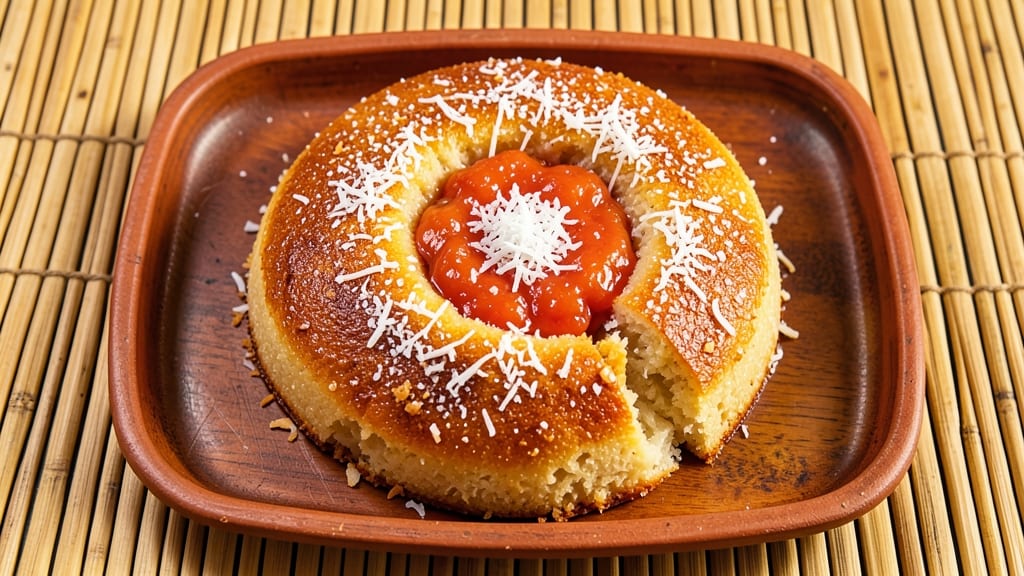
This Philippines rice cake recipe delivers the chewy, sweet perfection of bibingka—a golden-crusted holiday staple with a sticky mango filling that tastes like home. The traditional method uses glutinous rice flour and coconut milk for that signature texture, while modern twists like mango puree add vibrant tropical flavor.
I’ve perfected this version to balance authenticity with approachability, so you can recreate the aroma of Filipino kitchens during Christmas season or any special occasion.
The secret lies in the slow steaming process, which transforms sticky rice batter into tender, chewy layers with a slightly crispy exterior. Unlike store-bought versions, this recipe uses natural ingredients—no artificial colors or preservatives—while still delivering that irresistible caramelized sweetness.
The mango filling adds a bright contrast that makes every bite unforgettable, and the optional latik (coconut caramel) drizzle elevates it to restaurant-quality dessert.
What you’ll achieve is a rice cake with the perfect balance of textures: a soft, jiggly center wrapped in a golden crust, all infused with coconut and mango flavors. Serve it warm with a sprinkle of grated coconut or a side of keso (Filipino cheese) for the full experience.
This dessert is as much about tradition as it is about taste—ideal for gatherings, family meals, or when you crave a taste of home.
Ready to make it? The process is simpler than it looks, and I’ll walk you through every step—from preparing the batter to achieving that signature chewy texture. Let’s bring a little Filipino warmth to your table.
Ingredients for rice cake philippines
Twelve ingredients transform into twelve golden, chewy rice cakes bursting with mango and coconut.
| Ingredient | Amount | Notes |
|---|---|---|
| Glutinous Rice Flour 🍚 | 3 cups | Also called sweet rice flour |
| Coconut Milk 🥥 | 2 cans | Full-fat, 13.5 oz each can |
| Granulated Sugar 🍬 | 1 ½ cups | White or brown preferred |
| Ripe Mangoes 🥭 | 3 medium | Peeled, pureed to 1 cup |
| Unsalted Butter 🧈 | ½ cup | Cold, cubed for topping |
| Large Eggs 🥚 | 4 whole | Room temperature |
| Baking Powder 🧂 | 2 tbsp | Aluminum-free preferred |
| Salt 🧂 | ½ tsp | Fine sea salt |
| Shredded Coconut 🥥 | 1 cup | Sweetened or unsweetened |
| Latik (Coconut Caramel) 🍯 | ½ cup | Store-bought or homemade |
| Keso (Filipino Cheese) 🧀 | 1 cup | Shredded, optional topping |
| Vanilla Extract 🌿 | 1 tsp | Pure vanilla preferred |
| Water 💧 | 1 ½ cups | Room temperature |
| Food Coloring (optional) 🎨 | 1 tsp | Yellow or orange for color |
The glutinous rice flour is non-negotiable—it’s what gives bibingka that signature chewy texture. Filipino markets or Asian grocery stores carry it in bags, but if you can’t find it, Bob’s Red Mill sells it online. Look for a fine, white powder—it should feel silky, not gritty. The coconut milk needs to be full-fat; Goya or Thai Kitchen brands work perfectly. For the mangoes, ripe but firm is key—think slightly soft when squeezed but not mushy. Puree them until completely smooth, no chunks. I always double-check the sugar isn’t clumped; Domino or C&H brands dissolve best.
No ripe mangoes? Frozen mango puree works in a pinch—just thaw and drain excess liquid. The latik can be tricky to find outside Filipino stores, but store-bought caramel sauce thinned with coconut milk mimics the flavor. For the butter, European-style (like Plugrá) melts more smoothly for that perfect golden crust. The keso cheese is optional but adds that authentic Filipino touch—if you can’t find it, Monterey Jack shreds work as a substitute. The baking powder must be fresh; if it’s over a year old, toast it in the oven for 10 minutes to revive it. And yes, the vanilla extract matters—imitation smells like perfume.
The batter keeps for 2 days in the fridge, covered tightly. The mango puree can be prepped 3 days ahead—it actually tastes better after sitting. For the latik drizzle, make it fresh or thaw frozen portions in the microwave for 20 seconds at a time. These cakes reheat beautifully—steam for 5 minutes to restore that warm, jiggly center. Leftovers? Wrap tightly in plastic and freeze for up to 2 months. The texture changes slightly after freezing, but they still taste amazing—just steam longer to revive.
Why You'll Love This Recipe
- I’ll be real: this costs next to nothing, but it tastes like a fancy dessert. Glutinous rice flour and mangoes stretch far, and the leftovers? Even better the second day. Plus, you can halve the sugar if you’re watching portions—no guilt, all flavor.
- No-Fuss Steaming: I swear, this recipe is that easy—just mix, steam, and repeat. The glutinous rice flour turns into a soft, pillowy texture with zero fuss, and honestly? The hardest part is waiting for the mango to ripen just right.
- Sweet-Creamy Magic: That combo of coconut milk and butter makes these cakes ridiculously rich—like a cross between a rice pudding and a mango dessert. The sugar caramelizes just enough to give it a subtle chewy edge, and the ripe mango? Pure tropical happiness in every bite.
- Picnic or Potluck Hero: Between us, these are my go-to for gatherings. They travel well, stay fresh for days, and no one ever leaves with just one. Pack them in a basket for a beach day or bring them to a barbecue—guaranteed to disappear fast.
Step-by-step instructions for chewy and sweet mango-sticky delight
Here's how to create this signature Filipino rice cake with perfect texture and vibrant flavor.
Prepare the Mango Puree and Wet Ingredients
Peel the 3 medium ripe mangoes and blend them until completely smooth, yielding about 1 cup of puree. Set aside. In a large mixing bowl, combine the 2 cans coconut milk, 1.5 cups granulated sugar, the mango puree, 4 whole large eggs, 1 teaspoon vanilla extract, and 1.5 cups water. Whisk vigorously for 3-4 minutes until the sugar fully dissolves and the mixture becomes glossy and well-blended.
This step is crucial for creating the cake's signature chewy texture. The coconut milk provides richness while the sugar and mango puree create that signature sweet-tart balance. I like to use ripe mangoes that are just soft enough to blend smoothly without being watery.
Mix the Dry Ingredients and Combine
In a separate bowl, sift together the 3 cups glutinous rice flour, 2 tablespoons baking powder, and 0.5 teaspoon salt. Gently fold this dry mixture into the wet ingredients using a spatula, being careful not to overmix. The batter should be thick but pourable, similar to pancake batter. If using food coloring, add 1 teaspoon now and mix thoroughly.
Here's where the magic happens—the glutinous rice flour gives this cake its signature chewy texture. Folding gently prevents developing gluten that would make the cake tough. The baking powder provides just enough lift while maintaining that dense, moist quality. If the batter seems too thick, add 1-2 tablespoons water at a time until it reaches the right consistency.
Steam the Cake to Perfection
Grease a 9x13-inch baking dish thoroughly with butter or oil, then line the bottom with parchment paper. Pour the batter into the prepared dish and smooth the top. Cover tightly with aluminum foil, leaving a small vent hole. Place the dish in a steamer basket over boiling water and steam for 45-50 minutes until the cake springs back when gently pressed and a toothpick inserted comes out clean.
The steaming method is what creates that signature chewy texture. I've found that using a tight foil cover helps trap moisture while the vent hole prevents pressure buildup. The cake should be set but still slightly jiggly in the center when done. Don't be tempted to overcook—this cake continues to set as it cools.
Top and Finish the Cake
Remove the cake from the steamer and let it cool for 15 minutes. In a small saucepan, gently melt the 0.5 cup latik (coconut caramel) over low heat until smooth. Spread this evenly over the warm cake. While still warm, sprinkle the 1 cup shredded coconut and 1 cup keso (Filipino cheese) evenly over the top. Drizzle the melted 0.5 cup unsalted butter over the top for extra richness.
This is the moment that matters—the topping transforms the cake from good to extraordinary. The latik adds that signature caramelized coconut flavor, while the shredded coconut and keso provide texture contrast. The butter creates a beautiful sheen and adds richness. I like to work quickly at this stage so the toppings adhere well before the cake cools completely.
Pro Tips For Making Rice Cake Philippines
- Steam, Don’t Boil: Glutinous rice flour turns gummy when it hits water—steaming keeps it tender. Line your steamer with banana leaves or parchment (no direct contact with metal), and pour the batter into greased ramekins just before steaming. If your kitchen lacks a steamer, use a colander over a pot of simmering water and cover tightly. Overcooking here ruins the texture, so check at 20 minutes, even if the recipe says 30.
- Strain the Coconut Milk: Store-bought coconut milk often has grit or thick sediment that makes your rice cake grainy. Strain it through a fine-mesh sieve or cheesecloth before mixing—especially if you’re using canned versions. I learned this the hard way when my first batch had a weird texture; now I double-strain for smoothness. Skip this, and you’ll taste the difference in every bite.
- Mash Mangoes Like Purée: Diced mango pieces sink and create pockets of dryness. Blend ripe mangoes into a thick purée first, then fold it into the batter for even distribution. If you’re lazy (like me), at least mash them thoroughly with a fork—no visible chunks means no surprises when you cut into the cake. Trust me, your guests will notice the inconsistency.
- Butter the Ramekins Well: Glutinous rice flour sticks like glue, and rice cakes unravel if they don’t release cleanly. Use unsalted butter (the recipe calls for it), melt it slightly, and brush it generously on ramekins—including the rims. A quick dip in flour after buttering helps too. I used to skimp here, and my cakes always tore apart at the edges. Now they slide out like butter.
Creative variations of this dish
Classic Bibingka Twist
Swap the mango filling for urab (coconut curds) mixed with 1 cup brown sugar and 1 tsp pandan extract. This traditional Christmas version from Pampanga replaces fruit with creamy coconut, creating a denser, caramelized center.
For extra richness, fold in ½ cup toasted coconut flakes into the batter before steaming. The pandan gives it that signature floral aroma that’s unmistakably Filipino. 🌟
Puto Bumbong Modern
Transform this into puto bumbong by replacing the mango with purple yam puree (about 1 cup) and adding ½ tsp turmeric to the batter for that golden hue. Top with grated coconut and edible flowers instead of keso.
The yam adds natural sweetness while keeping the cake moist. For authenticity, serve in banana leaves—just wrap the steamed cake in them for 10 minutes before serving. This version is a hit during Christmas feasts in the Visayas.
Suman Pandan Fusion
For a suman-inspired variation, replace the glutinous rice flour with ½ cup regular rice flour and add ½ cup glutinous rice flour for texture. Mix in 1 tbsp toasted sesame seeds and 1 tsp salted egg yolk paste (optional but traditional).
Steam in small banana leaf packets for individual portions. The result is a chewy, sticky cake with a fragrant pandan aroma—perfect for merienda or as a gift during holidays. 💛
Chocolate-Latik Layered
Divide the batter into two portions. Mix ½ cup cocoa powder into one half for a chocolate version. Steam both batters separately, then layer them in a dish with melted latik between. Top with white chocolate shavings and crushed macadamia nuts for a luxurious twist.
This fusion of Filipino and Western flavors is ideal for birthdays or special occasions. The contrast between the rich chocolate and sweet latik is pure decadence.
Ube-Inspired Purple Delight
Replace the mango puree with ube (purple yam) halaya (about 1 cup—store-bought or homemade). Add ½ tsp annatto powder for a vibrant color. The ube gives a vibrant purple hue and a naturally sweet, earthy flavor.
Top with toasted coconut and a drizzle of latik. This version is a modern take on traditional flavors, perfect for Instagram-worthy desserts. The ube’s creaminess pairs beautifully with the coconut caramel topping. ✨
Nutrition facts
Frequently asked questions
What's the difference between bibingka and puto?
Bibingka is a steamed rice cake with a golden crust, often topped with latik (coconut caramel) and keso (Filipino cheese), while puto is softer and usually served in banana leaves. This recipe makes bibingka-style rice cakes—the chewy texture comes from steaming the glutinous rice batter in a baking dish rather than wrapping it in leaves.
Can I make this without a steamer?
Yes! Use a large pot with a trivet or inverted colander. Fill the pot with 2 inches of water, bring to a boil, then place your covered baking dish on top. The water should simmer gently—not boil vigorously—to prevent soggy cakes. For even cooking, rotate the dish halfway through steaming.
Why did my rice cake turn out dense instead of chewy?
Overmixing the batter or oversteaming are the most common culprits. The batter should be thick but pourable—like pancake batter. Also, check your glutinous rice flour: it must be fine and fresh. If the cake feels gummy, it may need 5 more minutes of steaming—but don't overdo it, or it'll dry out.
How do I store leftovers?
Wrap tightly in plastic wrap and store at room temperature for 2 days. For longer storage, refrigerate for up to 5 days or freeze for 2 months. To reheat, steam for 5-10 minutes or microwave for 20 seconds—just add a splash of water to restore moisture.
Can I substitute mango with other fruits?
Try jackfruit puree (for a tropical twist) or ripe banana mashed with 1 tsp lemon juice. For a festive touch, use purple yam (ube) halaya—just reduce the sugar to 1 cup. The key is to keep the puree smooth and well-drained to maintain the cake's texture.