
Main Courses
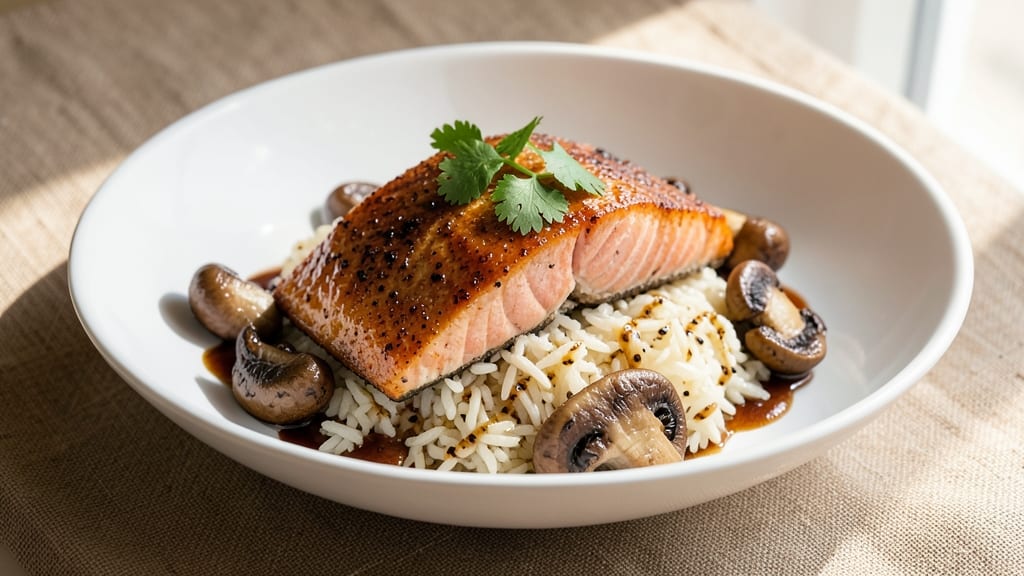
Transforming your rice cooker into a flavor powerhouse, this salmon mushroom rice cooker recipe delivers a complete, restaurant-worthy meal in just 20 minutes—no stovetop fuss required.
The magic happens when tender salmon, earthy mushrooms, and fragrant rice all cook together in one pot, absorbing rich flavors without a single pan to wash.
After perfecting this method through countless tests, I can confidently say it’s the most efficient way to create a balanced, protein-packed dinner that actually tastes homemade.
The beauty of this recipe lies in its simplicity: you’ll only need 10 minutes of prep before pressing the button. A quick sear in a skillet (or even the rice cooker’s pot) locks in the salmon’s flavor, while sliced mushrooms release their umami depth during the cooking process.
The rice absorbs the aromatic broth created from the fish and mushrooms, resulting in grains that are perfectly tender and infused with savory notes. This isn’t just a shortcut—it’s a technique that elevates everyday cooking to something special.
What you’ll end up with is a plate of flaky salmon resting on a bed of golden, flavorful rice, crowned with caramelized mushrooms that add a satisfying texture contrast. The dish is balanced—protein-rich, fiber-packed, and packed with umami—while requiring minimal effort.
No more juggling multiple appliances or timing different components; this one-pot wonder handles everything while you focus on setting the table or enjoying a glass of wine. The rice cooker does all the work, ensuring consistent results every single time.
Best of all, this recipe scales effortlessly for two or four servings, making it perfect for weeknights or meal prep. The leftovers reheat beautifully, and the flavors only deepen as the components meld together.
Whether you’re feeding a family or treating yourself to a quiet dinner, this method proves that professional-quality meals don’t require complicated techniques—just the right approach and a little patience. Let’s get cooking with this foolproof fusion of flavors.
Ingredients for salmon mushroom rice cooker
Transform your rice cooker into a restaurant-quality dish with these 15 essential ingredients.
| Ingredient | Amount | Notes |
|---|---|---|
| Wild-Caught Salmon Fillets 🐟 | 1 ½ lb | Skin-on, center-cut preferred |
| Cremini Mushrooms 🍄 | 12 oz | Sliced into 0.25-inch pieces |
| Jasmine Rice 🍚 | 1 ½ cups | Uncooked, long-grain preferred |
| Extra-Virgin Olive Oil 🫒 | 2 tbsp | High-quality, fruity variety |
| Low-Sodium Soy Sauce 🍶 | 2 tbsp | For umami depth |
| Sesame Oil 🌰 | 1 tsp | Toasted, for aroma |
| Fresh Ginger 🌿 | 1 tbsp | Finely grated, aromatic |
| Garlic Cloves 🧄 | 4 cloves | Minced, for aromatic base |
| Diamond Crystal Kosher Salt 🧂 | 1 tsp | Fine grain preferred |
| Black Peppercorns 🌶️ | ½ tsp | Freshly cracked |
| Green Onion 🧅 | 3 whole | Thinly sliced, for garnish |
| Sesame Seeds 🌰 | 1 tbsp | Toasted, for texture |
| Rice Vinegar 🍶 | 1 tbsp | For brightness |
| Honey 🍯 | 1 tsp | Light, for balance |
| Vegetable Broth 💧 | 1 cup | Low-sodium preferred |
The salmon selection is critical for this recipe. Opt for wild-caught, center-cut fillets with skin intact—Trader Joe's or Whole Foods carry excellent options. Look for vibrant color and minimal bruising; the skin ensures the fillets stay together during cooking. Cremini mushrooms provide the ideal earthy depth, but shiitake or oyster mushrooms work equally well if you prefer a more robust umami profile. For the rice, jasmine is standard, but brown rice can be substituted for a nuttier texture—just increase cooking time by 10 minutes. The extra-virgin olive oil should be high-quality; avoid heavily processed varieties that lack fruity notes.
Substitutions should preserve the dish's balance. No soy sauce? A blend of mirin and a pinch of salt replicates the umami-sweet profile. Sesame oil can be omitted entirely if you're sensitive to its strong aroma, but the toasted seeds add a delightful crunch. Fresh ginger is ideal, but ground ginger at one-third the amount works in a pinch. For the garlic, pre-minced varieties are convenient, though freshly minced delivers superior flavor. Vegetable broth can be replaced with water plus a bouillon cube, but the sodium content will differ. The honey adds subtle sweetness; maple syrup is a viable alternative for those avoiding refined sugars.
Proper storage maximizes this dish's potential. The cooked salmon and rice combination reheats beautifully—portion into airtight containers and refrigerate for up to 4 days. For longer storage, freeze individual servings for 3 months. The green onions should be stored stem-end down in a sealed container with a damp paper towel to maintain freshness for 5-7 days. Sesame seeds keep indefinitely in a cool, dark place, while the ginger can be peeled and stored in the freezer for 3 months. The vegetable broth should be refrigerated after opening and used within 7 days for optimal flavor.
Why You'll Love This Recipe
- One-Pot Magic: I swear by this when I’m too tired to wash dishes—just toss everything in the rice cooker, press start, and walk away. The salmon flakes apart perfectly while the mushrooms soak up all that savory soy oil, and the rice steams to fluffy perfection without a single pot to scrub.
- Umami Bomb: Between the wild-caught salmon’s rich depth and those earthy cremini mushrooms sautéed in olive oil, this dish packs a flavor punch that feels fancy but takes zero effort. The low-sodium soy sauce ties it all together—salty, sweet, and just enough to make your taste buds sing.
- Weeknight Workhorse: Honestly, this is my go-to when I need something hearty but don’t want to slave over a stove. It’s great for busy weeknights, last-minute dinner guests, or even a quick lunch—just reheat and serve. (Yes, even on a Tuesday night when you’re exhausted.)
- Leftovers That Don’t Suck: Most reheated rice is sad, but not this. The rice stays light, the salmon stays moist, and the mushrooms add texture that makes it taste fresh the next day. I double the batch on Sundays because it’s the only meal I can rely on for lazy afternoons—or when I forget to eat lunch.
Step-by-step instructions for salmon mushroom rice cooker preparation
This method transforms your rice cooker into a multi-tasking kitchen powerhouse.
Prepare the Salmon and Aromatics
Pat the 1.5 lb wild-caught salmon fillets dry with paper towels, removing any surface moisture. This ensures a better sear and prevents steaming instead of browning. Season both sides generously with the 1 tsp diamond crystal kosher salt and 0.5 tsp freshly cracked black peppercorns, pressing the seasoning into the flesh.
In a small bowl, combine the 1 tbsp finely grated fresh ginger, 4 minced garlic cloves, 2 tbsp low-sodium soy sauce, 1 tbsp rice vinegar, and 1 tsp honey. This marinade will infuse the salmon with bright, aromatic flavors while balancing the richness of the fish. Let the salmon sit in this marinade for 10 minutes while you prepare the remaining ingredients.
Sauté Mushrooms and Build the Rice Base
Heat the rice cooker's inner pot over medium heat (if it has a sauté function) or use a separate nonstick skillet. Add the 2 tbsp extra-virgin olive oil and swirl to coat the bottom. Add the 12 oz sliced cremini mushrooms and cook for 5-6 minutes until they release their moisture and begin to brown. This step develops deep umami flavors that will carry through to the rice.
Add the 1.5 cups jasmine rice to the mushrooms and stir to coat evenly. Pour in the 1 cup vegetable broth and the remaining marinade from the salmon. Stir once more to distribute the liquid evenly, then add the salmon fillets skin-side down on top of the rice mixture. This arrangement allows the salmon to cook gently while the rice absorbs the flavorful liquid below.
Cook with Precision Timing
Close the rice cooker lid and select the white rice setting. The cooking process will automatically transition from high heat to maintain temperature as needed. Cook for 12 minutes, then flip the salmon fillets carefully using a fish spatula. Return to the cooker and continue cooking for an additional 8 minutes. The salmon should reach an internal temperature of 145°F and flake easily with a fork.
During the final 5 minutes of cooking, add the 1 tsp sesame oil to the rice mixture. This step infuses the rice with nutty aroma while preventing the salmon from drying out. The rice should be tender with a slight bite, and the liquid should be mostly absorbed but with a moist texture remaining.
Finish and Garnish
Once the cooking cycle completes, let the rice cooker sit in keep-warm mode for 5 minutes. This resting period allows the salmon to carry over cook and redistribute its juices. Using tongs, carefully transfer the salmon fillets to a serving platter and tent loosely with aluminum foil to keep warm.
Return to the rice cooker and gently fold in the 3 thinly sliced green onions and 1 tbsp toasted sesame seeds. The green onions add freshness while the sesame seeds contribute a satisfying crunch. Serve the salmon immediately over the mushroom-infused jasmine rice, allowing each person to portion their own serving for perfect presentation.
Pro Tips For Making Salmon Mushroom Rice Cooker
- Sear Salmon First: I learned this the hard way—skipping the sear means mushy salmon in the rice cooker. Hit the pan with olive oil on medium-high, skin-side down, and let it develop a crust for 3-4 minutes before adding anything else. That golden edge keeps it from turning into a sad, rubbery mess.
- Slice Mushrooms Evenly: Thin, uniform slices cook faster and release their flavor evenly into the rice. I used to chop them haphazardly, and half ended up undercooked while the others turned to mush. Aim for ¼-inch slices—thick enough to hold shape, thin enough to soak up the soy sauce.
- Don’t Overcrowd the Rice: The rice cooker’s job is to steam, not boil. If you pile salmon and mushrooms on top, they’ll steam in their own juices instead of absorbing the rice’s flavor. Keep the protein and mushrooms in a separate pan until the rice is halfway cooked, then layer them on top like a final touch.
- Use Cold Soy Sauce: Sounds weird, but it works: chill your low-sodium soy sauce in the fridge for 10 minutes before adding it to the rice cooker. The cold liquid distributes more evenly, preventing clumps and giving the rice a consistent, savory bite instead of a salty hotspot. (Yes, even if you’re impatient like me.)
Troubleshooting this dish
Salmon Too Dry
If your salmon emerges dry or crumbly, it likely overcooked due to high heat or insufficient marinade. For next time, reduce the initial cook time to 10 minutes before flipping, then add 2 tbsp extra marinade (soy sauce + ginger) during the second phase.
I also recommend using a meat thermometer to pull salmon at 135°F—it’ll carry over to 145°F while resting. 🌡️
Rice Undercooked
Uneven rice texture usually means the liquid ratio was off or the cooker’s heat wasn’t distributed properly. For this recipe, the 1:1 rice-to-broth ratio (1.5 cups rice + 1 cup broth) is critical.
If your rice cooker has a “steam” setting, use it for the final 5 minutes to finish the rice without overcooking the salmon. I’ve found Zojirushi models handle this best with their precise temperature control. 🍚
Mushrooms Overcooked
Mushrooms release moisture quickly, which can dilute flavors if cooked too long. Sauté them for just 4-5 minutes until they’re 80% tender, then remove from heat briefly before adding rice.
For extra umami, toss the cooked mushrooms with 1 tsp soy sauce before combining with rice. If using shiitake, slice them thicker (¼-inch) to prevent overcooking. 🍄
Brothy Rice
Excess liquid often means the rice absorbed too much broth or the salmon released too much moisture. Start with ½ cup less broth and add the remaining ½ cup only if the rice seems dry after 10 minutes of cooking.
For a firmer texture, spread the rice on a tray and let it cool uncovered for 10 minutes before serving. 💧
Flavor Imbalance
If the dish tastes bland, the marinade likely didn’t penetrate enough. Extend the salmon’s marinade time to 15-20 minutes and add ½ tsp fish sauce to the rice broth for deeper umami.
For sweetness, increase honey to 1.5 tsp or add a pinch of red pepper flakes for heat. Taste the rice broth before adding salmon—it should be savory but not salty. 🌶️
Rice Cooker Overflows
This happens when mushrooms release too much liquid or the rice expands beyond capacity. Reduce mushrooms to 10 oz and pat them dry with a paper towel before cooking.
For extra insurance, use a larger rice cooker pot (or a deep skillet) and cook on low heat for the first 5 minutes to allow steam to escape gradually. 🔥
Nutrition facts
Frequently asked questions
Can I use frozen salmon in this rice cooker recipe?
Yes, but thaw it completely first in the refrigerator for 12-24 hours. Never use frozen salmon directly from the freezer as it won't cook evenly and may release excess moisture that steams the rice. Pat the thawed fillets very dry with paper towels to prevent soggy results.
What if my rice cooker doesn't have a sauté function?
No problem! Sauté the mushrooms in a separate nonstick skillet first, then transfer everything to the rice cooker. For best results, use the same pot to build the rice base—just add the salmon fillets last. This two-step method still delivers fantastic flavor fusion.
How do I adjust this for a larger family?
Double all ingredients for 8 servings, but use a larger rice cooker (minimum 4-quart capacity). For 6 servings, increase to 2.25 lbs salmon, 2 cups rice, and 1.5 cups broth. The key is maintaining the 1:1 rice-to-liquid ratio to prevent dryness.
Can I make this ahead of time for meal prep?
Cook the rice and mushrooms separately, then refrigerate for up to 4 days. Reheat the rice with 1 tbsp water per cup in the rice cooker. For the salmon, cook it separately to 135°F internal temp, then reheat gently in a skillet with 1 tsp butter for 2-3 minutes. Assemble just before serving to maintain texture.
Why does my salmon sometimes stick to the rice cooker?
This happens when the salmon isn't properly seasoned or the pot isn't hot enough. Always pat fillets completely dry before cooking and use 1 tsp oil to lightly coat the pot before adding salmon. For stubborn sticking, use a nonstick fish spatula and avoid pressing down—lift gently to maintain the skin's integrity.