
Desserts
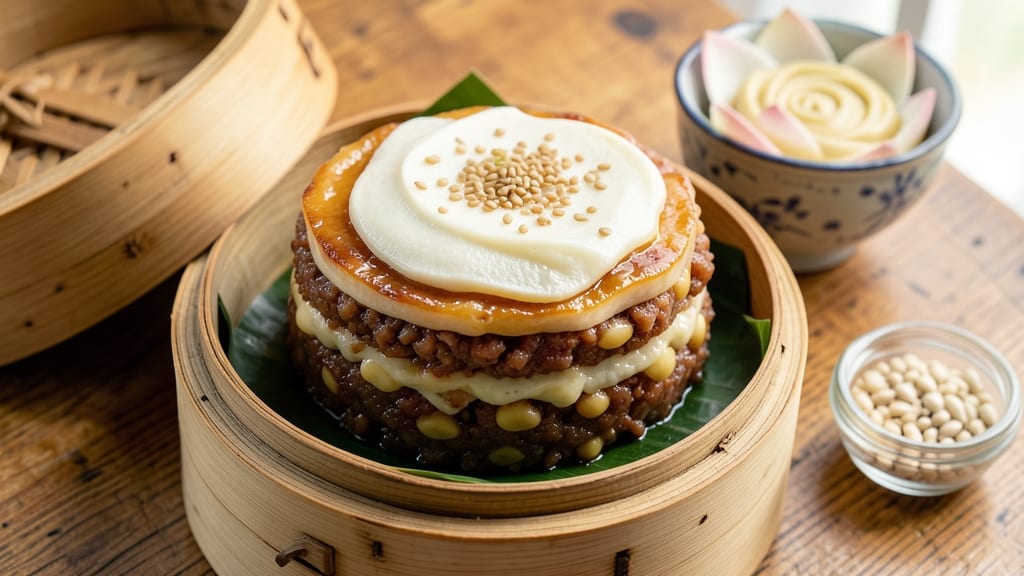
This Vietnamese steamed rice cake recipe delivers the delicate, silky texture and fragrant aroma of traditional Bánh tét, perfected with a lotus coconut filling that captures the essence of Vietnamese New Year celebrations.
The key lies in the precise balance of glutinous rice flour and coconut milk, creating a batter that transforms into tender, melt-in-your-mouth layers when steamed.
I've refined this method over years of making it for Tet, ensuring every bite carries that authentic combination of sweetness and subtle savory notes from the traditional pork-mung bean filling.
The process begins with preparing the rice batter—a simple yet critical step where rice flour, coconut milk, and sugar combine to form a smooth, pourable mixture.
Wrapping this delicate batter around a filling of seasoned pork, mung beans, and aromatic spices creates the signature cylindrical shape of Bánh tét. What makes this recipe special is the steaming technique: slow, even heat that develops the cake's signature silky texture without drying it out, resulting in a dessert that's both elegant and comforting.
The lotus coconut variation adds a modern twist while maintaining the dish's cultural roots.
By following this method, you'll achieve perfectly steamed rice cakes with a tender, almost translucent interior and a subtle golden hue at the edges. The lotus coconut filling adds a delicate floral note that complements the traditional savory filling, creating a harmonious blend of old and new.
These cakes are ideal for special occasions like Tet or Lunar New Year celebrations, where they're often sliced and served with tea or coffee. The recipe also includes vegetarian adaptations, making it accessible to all.
Whether you're preparing for a family gathering or simply craving a taste of Vietnam, this recipe delivers authentic results with professional techniques simplified for home cooks. The steaming process requires patience but yields cakes that are worth every moment of preparation.
Serve them warm or at room temperature, and watch as they become the centerpiece of any dessert table. Let's create these silky delights together.
Ingredients for vietnamese steamed rice cake
Sixteen ingredients transform into silky Vietnamese steamed rice cakes with authentic Tet flavors.
| Ingredient | Amount | Notes |
|---|---|---|
| Glutinous Rice Flour 🍚 | 3 cups | Also called sweet rice flour |
| Coconut Milk 🥥 | 2 cups | Full-fat, canned preferred |
| Granulated Sugar 🍚 | ½ cup | White or brown preferred |
| Water 💧 | 1 ½ cups | Room temperature |
| Ground Lotus Seeds 🌸 | ½ cup | Or substitute with coconut flakes |
| Lotus Flower Paste 🌸 | ¼ cup | For floral aroma |
| Salt 🧂 | ½ tsp | Fine sea salt preferred |
| Vegetable Oil 🫒 | 1 tbsp | For greasing molds |
| Silicon Steaming Molds 🍜 | 6 whole | Cylindrical shape preferred |
| Pork Shoulder 🥩 | 1 lb | Lean, finely ground |
| Mung Beans 🌱 | 1 cup | Cooked, mashed slightly |
| Fish Sauce 🍶 | 1 tbsp | Red Boat preferred |
| Black Pepper 🌶️ | ½ tsp | Freshly ground preferred |
| Shallots 🧅 | 2 whole | Finely minced |
| Garlic Cloves 🧄 | 4 cloves | Minced finely |
The glutinous rice flour is the heart of these cakes—look for brands like Thai Kitchen or Bob's Red Mill for reliable quality. The coconut milk should be full-fat for richness; Aroy-D or Thai Kitchen brands are trusted choices. For the lotus filling, Asian markets carry ground lotus seeds and paste, or you can find them online. The pork should be lean and finely ground—ask your butcher to process it if buying whole. Shallots and garlic need to be minced finely for that authentic Tet flavor. If you can't find lotus seeds, toasted coconut flakes work beautifully as a substitute.
No ground lotus seeds? Toasted coconut flakes or even dried pandan leaves (crushed) can mimic the floral note. For a vegetarian version, replace pork with finely chopped mushrooms or tofu, and use soy sauce instead of fish sauce. The fish sauce is crucial—Red Boat or Three Crabs brands are ideal, but any good-quality brand works. If your mung beans are dried, soak them overnight for even texture. The batter needs to be smooth and pourable, so sift the rice flour well and whisk the coconut milk until frothy.
Store unsteamed batter in an airtight container for up to 2 days in the fridge. Steamed cakes keep well in the fridge for 3-4 days, wrapped tightly in plastic. For longer storage, freeze them for up to 3 months—thaw at room temperature before serving. These cakes are best served warm or at room temperature, making them perfect for special occasions. The lotus coconut variation adds a delicate floral note that complements the traditional savory filling beautifully.
Why You'll Love This Recipe
- No-Fuss Mixture: I swear by the simplicity—just whisk, steam, and let the glutinous rice flour do its magic. No kneading, no fussing, and those lotus seeds add a nutty crunch without extra effort.
- Sweet Creamy Magic: That coconut milk makes it ridiculously good—silky, slightly sweet, and the sugar caramelizes just enough to give it a golden edge. Honestly, the first bite feels like a little treat every time.
- Breakfast or Dessert: Serve it warm with tea for a cozy morning, or chill it and slice into squares for a snack. My kids grab these cold from the fridge when they’re hungry—proof it works any time of day.
- Budget-Friendly Stretch: A single batch feeds four, and leftovers stay fresh for days. Between us, I’ve made these for potlucks, school lunches, and lazy Sundays—never a waste, always a win.
Step-by-step instructions for Vietnamese steamed rice cake
Here's the method for creating silky, fragrant rice cakes with perfect texture every time.
Prepare the Pork Filling
In a food processor, combine the 1 lb pork shoulder, 1 cup cooked and mashed mung beans, 2 whole minced shallots, 4 cloves minced garlic, 1 tablespoon fish sauce, and 0.5 teaspoon black pepper. Pulse until the mixture forms a fine, cohesive paste with no visible chunks remaining. This texture ensures even distribution of flavor throughout the filling.
Transfer the pork mixture to a bowl and set aside. The filling should be smooth enough to pipe easily into the rice cake batter later. If it feels too dry, add 1 teaspoon of the 1.5 cups water to help bind it together. The filling needs to hold its shape when steamed but remain tender when sliced.
Mix the Lotus Coconut Batter
In a large mixing bowl, whisk together the 3 cups glutinous rice flour, 0.5 cup granulated sugar, 0.5 teaspoon salt, 0.5 cup ground lotus seeds, and 0.25 cup lotus flower paste. Stir until these dry ingredients are completely combined and no flour pockets remain. This ensures even distribution of the floral and nutty flavors throughout the batter.
In a separate bowl, combine the 2 cups coconut milk and 1.5 cups water. Gradually pour this liquid mixture into the dry ingredients while whisking continuously. The batter should become thick but still pourable, similar to a very stiff pancake batter. If it feels too thick, add 1 tablespoon at a time of additional water until it reaches the right consistency. The ideal batter should coat the back of a spoon but still flow smoothly.
Assemble and Steam the Rice Cakes
Lightly grease the 6 whole silicon steaming molds with 1 tablespoon vegetable oil, coating both the interior and rims. This prevents sticking and makes removal easier later. Place the molds in a steamer basket, ensuring they're stable and won't tip during steaming.
Divide the pork filling into 6 equal portions. Using a piping bag or spoon, pipe or spoon 1 portion of filling into the bottom of each mold, pressing down gently to create an even layer. Then, carefully ladle the prepared batter over the filling in each mold, filling them about ¾ full. The batter should mound slightly above the mold edges for that classic rice cake shape.
Steam to Perfection
Bring a large pot of water to a rolling boil, then reduce heat to maintain a gentle simmer. Place the steamer basket with the filled molds over the water, ensuring the water doesn't touch the bottom of the molds. Cover with a tight-fitting lid and steam for 45-50 minutes. The cakes are done when they spring back slightly when pressed and pull away cleanly from the mold edges.
During steaming, resist the temptation to peek or lift the lid. The steam needs to circulate freely to create those signature silky layers. When finished, remove the cakes from the molds immediately while still warm. They'll firm up as they cool but should maintain their shape. Serve warm for the best texture and flavor experience.
Pro Tips For Making Vietnamese Steamed Rice Cake
- STEAM AT 170°F: I learned this the hard way—steaming too hot (212°F) makes the cakes rubbery instead of tender. Use a thermometer or watch for a gentle simmer in your pot; if water boils hard, lower the heat. The goal is slow, even cooking, not a race.
- SIFT THE FLOUR DRY: Glutinous rice flour clumps like a stubborn toddler if not prepped right. Sift it through a fine-mesh sieve before mixing with coconut milk—this cuts out lumps and ensures a silky texture. No sifter? Use a whisk and a colander, but don’t skip it.
- WEIGH THE COCONUT MILK: Store-bought coconut milk varies wildly in thickness. Measure by weight (200g for 1 cup) instead of volume—this guarantees consistent creaminess. Too much liquid = soggy cakes; too little = dense, dry bites. My grandmother’s trick: Chill the can first, then scoop the thick cream layer for extra richness.
- LAYER SUGAR LAST: Adding sugar early dissolves unevenly, leaving gritty pockets. Mix it after the batter sits for 10 minutes—this lets the flour absorb the coconut milk fully. For extra caramelized edges, sprinkle a pinch of sugar on top before steaming (yes, even if you’re impatient like me).
Wine and beer pairings for vietnamese steamed rice cake
Traditional Vietnamese Tea
For an authentic pairing, serve your steamed rice cakes with Vietnamese jasmine tea—its delicate floral notes complement the lotus coconut filling beautifully. I recommend Trung Nguyen or Saigon Tea brands for their premium quality.
Brew at 180°F for 3-4 minutes to avoid bitterness, then serve warm alongside thin slices of rice cake. The tea's subtle sweetness balances the savory pork filling while enhancing the floral coconut aroma. 🌸
Sweet Lychee Wine
Vietnamese lychee wine (rượu vải) is a perfect match for the lotus coconut variation. Look for Thanh Long or Vinarom brands, which offer fruity, slightly sweet wines with lychee and rose notes. Serve chilled to contrast the warm rice cakes.
The wine's natural sweetness mirrors the sugar in the batter while its floral undertones harmonize with the lotus filling. Aim for 50% lychee wine and 50% sparkling water for a refreshing sip. 🍷
Light Coconut Beer
For beer lovers, try a Vietnamese coconut beer like Bia Coconut from SABECO. This light, slightly sweet lager has a creamy coconut flavor that enhances the rice cake's tropical notes.
Serve it ice-cold to cut through the richness of the steamed cakes. The beer's mild carbonation also cleanses the palate between bites, making it ideal for sharing during celebrations. 🍺
Herbal Pandan Coffee
No Vietnamese dessert table is complete without pandan coffee (cà phê trứng). This creamy, egg-yolk-infused coffee has a distinct floral aroma from pandan leaves. I recommend Trung Nguyen Pandan Coffee for its smooth, aromatic profile.
Serve it hot with condensed milk for a traditional pairing that contrasts the delicate rice cakes' texture. The coffee's earthy notes ground the dish's sweetness. ☕
Sparkling Lotus Lemonade
For a modern twist, create a sparkling lotus lemonade by mixing sparkling water, fresh lemon juice, and a touch of lotus syrup (available at Asian markets). Add ice and garnish with edible lotus flowers for visual appeal.
This refreshing drink mirrors the floral notes in the rice cakes while providing a crisp contrast. The effervescence also enhances the steamed cakes' silky texture. 💫
Nutrition facts
Frequently asked questions
Can I make this recipe without a steaming basket?
Yes! Use a large pot with a heatproof plate or colander placed above the water. Make sure the water doesn't touch the molds—keep them at least 1 inch above the water level. Cover tightly with a lid or aluminum foil to trap steam. The steaming time may increase slightly to 55-60 minutes.
What if my batter is too thick or too thin?
For thick batter, add 1 tablespoon water at a time until it reaches a pourable consistency (like thick pancake batter). If too thin, whisk in 1 tablespoon glutinous rice flour until smooth. The ideal batter should coat the back of a spoon but still flow freely through a piping bag.
How do I store leftover steamed rice cakes?
Wrap cooled cakes tightly in plastic wrap and store in an airtight container. They'll keep in the fridge for 3-4 days or freeze for 3 months. To reheat, steam for 5-10 minutes or microwave for 20 seconds covered with a damp paper towel to restore moisture.
Can I make vegetarian rice cakes?
Replace the pork with finely chopped mushrooms or tofu, and use soy sauce instead of fish sauce. Add 1 teaspoon miso paste for umami depth. The lotus coconut filling remains the same, creating a delightfully fragrant vegetarian version perfect for Tet celebrations.
Why did my rice cakes stick to the molds?
This usually happens if the molds weren't properly greased or the batter was too wet. Next time, ensure you coat the molds thoroughly with oil and adjust the batter consistency. Also, avoid oversteaming—remove cakes as soon as they're set to prevent sticking during cooling.