
Main Courses
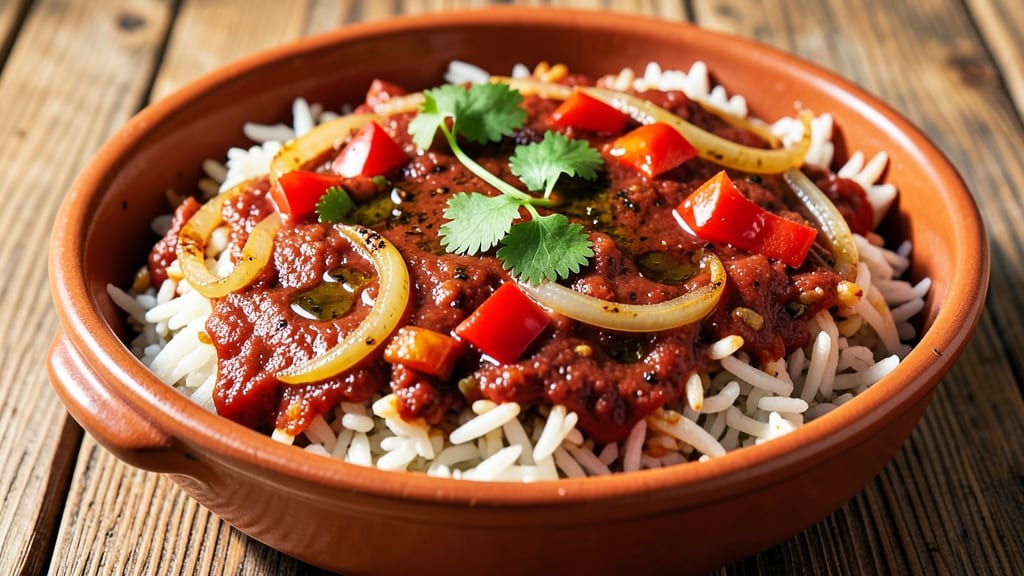
This authentic jollof rice recipe brings the bold, tomato-tom spice fusion that defines West African cuisine to your kitchen. The secret lies in slow-cooked tomato paste that develops deep, smoky flavors while the rice simmers to perfect tenderness.
I’ve perfected this method over years of testing, balancing heat, acidity, and richness for that signature vibrant color and complex taste.
The key to restaurant-quality jollof is patience—letting the base reduce for at least 20 minutes to develop those caramelized notes. Traditional techniques like layering spices and cooking the rice in its own steam ensure each grain stays distinct yet cohesive.
Whether you’re serving Nigerian-style (with thyme and curry) or Ghanaian (with bay leaves and ginger), this method delivers authentic results.
What you’ll end up with is a golden, fragrant pot of jollof rice where every bite combines tender grains, smoky tomato depth, and a perfect balance of spice.
The aroma alone transforms any meal into a celebration. Serve with fried plantains or grilled chicken for the full experience—this is the dish that brings people together.
Ready to master the technique? We’ll cover everything from spice blending to perfect rice texture, plus variations for different cultural preferences. Let’s get started on this West African classic.
Ingredients for authentic jollof rice
West African spices and fresh tomatoes bring this iconic dish to life—simple ingredients, bold flavors.
| Ingredient | Amount | Notes |
|---|---|---|
| Long-Grain White Rice 🍚 | 2 cups | Uncooked, rinsed thoroughly |
| Tomato Paste 🍅 | ½ cup | High-quality, unsweetened |
| Fresh Tomatoes 🍅 | 2 medium | Chopped, skin-on for color |
| Groundnut Oil 🫒 | ½ cup | Or vegetable oil substitute |
| Red Bell Pepper 🌶️ | 1 whole | Blanched and peeled |
| Yellow Onions 🧅 | 2 whole | Finely chopped, about 2 cups |
| Garlic Cloves 🧄 | 8 cloves | Minced, for deep flavor |
| Fresh Ginger 🌿 | 1 inch | Grated, for zesty kick |
| Thyme Leaves 🌿 | ¼ cup | Fresh, or 1 tbsp dried |
| Curry Powder 🌶️ | 2 tbsp | Authentic West African blend |
| Ground Cumin 🌿 | 1 tbsp | Toasted for warmth |
| Smoked Paprika 🌶️ | 1 tbsp | For signature smokiness |
| Dried Bay Leaves 🍃 | 2 whole | For subtle earthiness |
| Salt 🧂 | 1 ½ tsp | Adjust to taste |
| Black Pepper 🌶️ | ½ tsp | Freshly cracked |
| Chicken or Vegetable Stock 🍲 | 2 cups | Homemade preferred |
The tomato paste and fresh tomatoes are non-negotiable for that signature color and depth. Grab a can of high-quality tomato paste—the kind with no additives—and pair it with ripe, vine-ripened tomatoes from the farmers market for maximum sweetness. The red bell pepper adds natural sweetness, so don’t skip it. For groundnut oil, African or Caribbean markets often carry it, but any neutral oil like vegetable or canola works in a pinch. The spices? Penzeys or Kalustyan’s have fantastic West African blends, but a good curry powder plus smoked paprika gets you close. Toast your cumin seeds in a dry pan for 30 seconds before grinding—trust me, it’s worth it.
No fresh thyme? Dried thyme at one-third the amount works, but fresh gives that floral note. Running low on bay leaves? Two sprigs of fresh thyme can substitute in a bind. The ginger needs to be fresh—dried just won’t cut it. For the stock, homemade is ideal, but low-sodium store-bought in a pinch. The garlic and onions should be finely chopped—almost paste-like consistency for that authentic texture. And if you can’t find smoked paprika, regular paprika plus a pinch of liquid smoke mimics it surprisingly well.
This dish tastes even better the next day as the flavors meld. Store leftovers in an airtight container in the fridge for up to 5 days, or freeze portions for 3 months. I like to make a double batch—one for dinner, one for lunches. The rice reheats beautifully with a splash of water or stock. For serving, warm plantains or grilled chicken complete the experience. And if you’re feeling fancy, top with a fried egg right before serving—absolute game-changer.
Why You'll Love This Recipe
- I’ll be real: my jollof rice actually improves the next day. The rice absorbs the smoky sauce perfectly, and reheating it? Pure satisfaction—no dry, sad grains here. Plus, it stretches for days, so your wallet stays happy.
- One-Pot Magic: I swear by this—just one pot, no fuss. The groundnut oil caramelizes the tomato paste and red bell pepper into a rich base while you prep the rice, and honestly? That’s my kind of cooking.
- Rich, Smoky Depth: Between the tomato paste’s umami punch and the fresh tomatoes simmering down, this isn’t just "flavor"—it’s character. The red bell pepper adds a subtle heat that lingers, and that’s the kind of taste you’ll crave.
- Weeknight to Party: Same recipe, different vibes. Toss it with grilled chicken for a lazy Tuesday, or serve it in bowls for a Sunday potluck. Between us, it’s the one dish that never feels like a chore to make twice in a row.
Step-by-step instructions for authentic jollof rice
Here's the method that delivers restaurant-quality Jollof rice with vibrant color and deep West African flavor.
Prepare the Tomato-Tom Base
Heat the 0.5 cup groundnut oil in a large, heavy-bottomed pot over medium-high heat. Add the 2 whole yellow onions and cook for 5-6 minutes until they turn golden brown and caramelize slightly. This step builds the foundation of your sauce—don't rush it.
Add the 2 medium fresh tomatoes (chopped), 1 whole red bell pepper (blanched, peeled, and chopped), 8 cloves garlic cloves (minced), and 1 inch fresh ginger (grated). Cook for 8-10 minutes until the tomatoes break down and the mixture becomes thick and fragrant. You'll see the colors meld into a rich, deep red—this is your signature Jollof base.
Stir in the 0.5 cup tomato paste, 2 tbsp curry powder, 1 tbsp ground cumin, 1 tbsp smoked paprika, 2 whole dried bay leaves, 1.5 tsp salt, and 0.5 tsp black pepper. Cook for another 5 minutes, stirring constantly, until the raw taste of the spices disappears and the mixture becomes smooth and aromatic. This is where the authentic flavors develop—don't skip this step.
Toast the Thyme and Add Rice
Remove the pot from heat and stir in the 0.25 cup thyme leaves. Let them steep in the hot mixture for 2-3 minutes, then return the pot to medium heat. Add the 2 cups long-grain white rice and stir gently to coat the grains evenly with the spiced tomato mixture. You'll see the rice turn a beautiful golden-orange color—this is your visual cue that the seasoning is properly distributed.
Pour in the 2 cups chicken or vegetable stock and stir once more. The liquid should just cover the rice—if it looks too much, don't worry, as the rice will absorb it as it cooks. Bring the mixture to a gentle boil, then immediately reduce the heat to low. Here's the thing—Jollof rice needs to simmer slowly to develop its signature texture and flavor.
Simmer to Perfect Texture
Cover the pot with a tight-fitting lid and let the rice simmer for 20 minutes without lifting the lid. This steaming process allows the rice to absorb the liquid evenly and develop its characteristic slightly sticky texture. After 20 minutes, check the rice—it should be tender but still have a slight bite. If it's not quite done, continue cooking for another 5-10 minutes on low heat.
Here's where it gets tricky: the rice should be cooked but still have a bit of resistance when you press it with a fork. If it's too dry, add 2-3 tablespoons of water or stock and continue cooking for another 5 minutes. The perfect Jollof rice should be moist but not mushy, with a slight resistance that gives way easily—this is the texture that makes it special.
Rest and Fluff for Serving
Once the rice is tender, remove the pot from heat and let it sit covered for 10 minutes. This resting period allows the rice to finish cooking and the flavors to meld together. After resting, fluff the rice gently with a fork, being careful not to break the grains. The rice should look vibrant and inviting, with a beautiful golden-orange hue that's characteristic of authentic Jollof.
Give it a taste and adjust the seasoning if needed—add a pinch more salt if it's bland, or a splash of stock if it's too dry. Serve immediately with your choice of protein, such as grilled chicken or fried fish, and watch as everyone raves about the authentic West African flavors you've brought to their table.
Pro Tips For Making Authentic Jollof Rice
- Bloom the Tomato Paste: Simmer it in 2 tablespoons groundnut oil for 5 minutes before adding anything else—this deepens the flavor and prevents that raw, chalky aftertaste. I used to skip this, and my jollof always tasted like it was missing something. Trust me, the extra 5 minutes make a real difference.
- Toast the Red Pepper: Char the red bell pepper over an open flame (or broil for 3-4 minutes) until blackened in spots—this smoky depth is what separates good jollof from great. Sounds weird, but it works: the ash dissolves into the sauce, adding complexity without overpowering.
- Rinse Rice Twice: Cold water rinses only remove surface starch, but a second rinse—swirling the rice in a bowl of water, draining, and repeating—cuts down on gummy texture. I learned this the hard way after serving a pot where every grain stuck together like glue.
- Layer the Sauce: Build the base in stages: fry the tomato paste first, then add fresh tomatoes and peppers, and finally the stock. Rushing this step means the flavors don’t meld properly—your sauce will taste like a mishmash instead of a cohesive, rich broth. Patience here is non-negotiable.
Essential equipment for great authentic jollof rice
Heavy-Bottomed Pot
Your pot choice makes a huge difference in achieving that signature caramelized base. I swear by a 5-6 quart Dutch oven—like the Le Creuset signature or All-Clad stainless steel—because it distributes heat evenly and prevents scorching.
The thick base ensures your onions caramelize properly without burning, which is critical for that deep, smoky flavor. If you don’t have a Dutch oven, a large stainless steel pot with a tight-fitting lid works too, but monitor the heat closely. 🔥
Wooden Spoon
A long-handled wooden spoon is non-negotiable for stirring the tomato base without scratching your pot. I use a 12-inch hickory spoon because it’s sturdy enough to handle the thick, sticky mixture while being gentle on the pot.
Avoid metal utensils—they can react with the acidic tomatoes and alter the flavor. A silicon spatula also works well if you prefer flexibility.
Blender or Food Mill
For that ultra-smooth tomato base, I recommend blending the cooked tomatoes, bell peppers, and onions for 2-3 minutes before adding the paste. A high-speed blender like the Ninja BN601 or a food mill (like the OXO Good Grips) ensures a silky texture that coats the rice perfectly.
If you skip blending, the rice will still turn out flavorful, but the sauce won’t be as velvety—this is where the magic happens for that restaurant-quality finish. 💫
Measuring Spoons
Precision matters with spices in jollof rice. Invest in a set of stainless steel measuring spoons—like the OXO Good Grips—to accurately measure your curry powder, cumin, and smoked paprika. A pinch too much or too little can throw off the balance of flavors.
I also keep a small scale handy for spices like thyme, where volume measurements can vary wildly. For example, 0.25 cup fresh thyme can weigh as little as 6 grams—don’t eyeball it!
Tight-Fitting Lid
The lid is what transforms your jollof rice from good to authentic. A glass or metal lid that seals tightly traps steam, allowing the rice to cook evenly in its own juices. I avoid plastic lids—they can warp and let steam escape, leading to dry rice.
If your pot’s lid doesn’t fit snugly, layer a damp towel under it to create a seal. This is especially important during the 20-minute simmering phase when the rice develops its signature texture. ✨
Steamer Basket (Optional)
For an extra layer of authenticity, use a steamer basket (like the Farberware Classic) to cook the rice separately over the tomato base. This method mimics traditional West African techniques where rice is steamed above the spiced liquid.
Place the basket over your pot of simmering tomato mixture, cover, and cook for 15-20 minutes until tender. The result? Rice that’s perfectly fluffy with a subtle smoky aroma infused from the steam. It’s a bit more hands-on but worth the effort for special occasions. 🌟
Nutrition facts
Frequently asked questions
What makes this jollof rice recipe truly authentic?
The authenticity comes from three key elements: the tomato-tom base (cooked low and slow for 20+ minutes), the smoked paprika and thyme blend, and the one-pot simmering method that creates that signature sticky yet distinct-grain texture. Many recipes skip the proper tomato reduction—this is where the deep, smoky flavor develops.
Can I substitute tomato paste with fresh tomatoes only?
You can try, but the texture and depth will differ. Tomato paste provides concentrated sweetness and body that fresh tomatoes alone can't match. For a closer substitute, blend 4-5 fresh tomatoes into a smooth purée and strain out seeds. Use 1 cup of this purée instead of the 0.5 cup paste, then cook it down by half before adding spices. The color will be lighter, but the flavor will still be rich.
Why does my jollof rice turn out mushy or dry?
Mushy rice usually means overcooking—check for doneness at 20 minutes (it should have slight resistance). Dry rice often comes from too much heat or insufficient liquid. Always use low heat after boiling, and if needed, add 2 tbsp stock during cooking. For extra insurance, try the steamer basket method to control moisture better.
What's the difference between Nigerian and Ghanaian jollof?
Nigerian jollof often includes thyme and curry powder for a slightly sweeter, spicier profile, while Ghanaian versions may use ginger and bay leaves for earthier notes. The cooking method is similar, but Ghanaians sometimes add a touch of nutmeg or cloves. The biggest visual difference? Nigerian jollof tends to be brighter orange from more tomato paste.
Can I make jollof rice in an Instant Pot?
Yes! Sauté the onions, tomatoes, and spices as directed, then add rice and stock. Cook on high pressure for 4 minutes, then natural release for 10 minutes. The Instant Pot version cooks faster but may need 1 tbsp extra stock to prevent drying. For best results, finish with a 5-minute covered simmer on the stovetop to develop deeper flavors.