
Main Courses
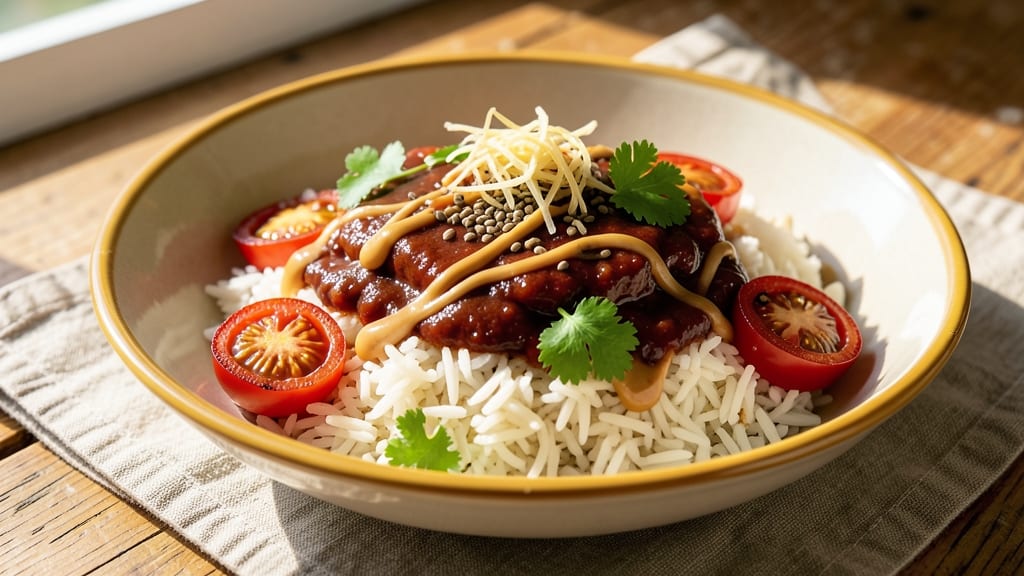
This Bhagara rice recipe delivers a bold fusion of smoky tomato and rich peanut butter flavors that transforms simple rice into a restaurant-worthy dish. The key lies in slow-cooked aromatics and a delicate balance of sweet, savory, and spicy notes that build layer upon layer of complexity.
I first encountered this dish at a local South Indian restaurant, where the chef insisted it was "the secret to making rice unforgettable."
The magic happens in the preparation: rice simmered with tamarind and tomatoes until deeply caramelized, then finished with a velvety peanut butter sauce that adds creaminess without overpowering the dish. Traditional techniques like dum cooking (slow parboiling) ensure perfectly fluffy grains that soak up every drop of flavor.
This method requires patience—about 45 minutes of hands-off cooking—but the results are worth every minute.
What you'll end up with is a dish that's visually stunning—golden rice speckled with toasted peanuts and fresh cilantro—while delivering a symphony of flavors in each bite.
The smoky tomato base provides depth, the peanut butter adds richness, and a touch of chili brings just enough heat to keep things interesting. This is comfort food at its finest, perfect for family dinners or special occasions.
Serve with yogurt on the side to cool the palate or pair it with grilled meats for a complete meal. The recipe scales beautifully, making it ideal for gatherings. Let's get cooking—this Bhagara rice will become your new go-to dish for weeknight dinners that feel like a celebration.
Ingredients for bhagara rice
Fifteen ingredients that transform ordinary rice into a restaurant-worthy South Indian masterpiece.
| Ingredient | Amount | Notes |
|---|---|---|
| Long-Grain Basmati Rice 🍚 | 1 ½ cups | Uncooked, rinsed thoroughly |
| Medium Tomatoes 🍅 | 4 whole | Ripe, diced (about 2 cups) |
| Tamarind Paste 🍯 | 2 tbsp | Concentrated, not pulp |
| Peanut Butter 🥜 | ½ cup | Natural, unsweetened |
| Fresh Cilantro 🌿 | ½ cup | Chopped, stems removed |
| Ginger Root 🧄 | 1 ½ tbsp | Freshly grated (about 1 oz) |
| Green Chilies 🌶️ | 2 whole | Slit lengthwise, seeds removed |
| Garlic Cloves 🧄 | 6 cloves | Peeled, minced finely |
| Mustard Seeds 🌱 | 1 tsp | Whole, for tempering |
| Cumin Seeds 🌿 | 1 tsp | Toasted lightly for aroma |
| Asafoetida Powder 🌶️ | ¼ tsp | Essential for authentic flavor |
| Turmeric Powder 🧂 | ½ tsp | Freshly ground preferred |
| Salt 🧂 | 1 ½ tsp | Adjust to taste |
| Vegetable Oil 🫒 | ½ cup | High smoke point preferred |
| Plain Yogurt 🥛 | ¼ cup | For serving, unsweetened |
The tomatoes and tamarind are the flavor anchors here. Ripe but firm tomatoes work best—look for vibrant red ones at Whole Foods or local farmers markets. Tamarind paste should be concentrated (like Bommasandra brand), not the sticky pulp. For ginger and garlic, fresh is non-negotiable—frozen or powdered won't deliver that bright, zesty punch. The green chilies should be fresh too; Thai bird's eye chilies from Asian markets add perfect heat without overpowering. Peanut butter matters—natural, unsweetened (like Smucker's or Crazy Richard's) ensures no artificial flavors muddy the dish.
No tamarind paste? Lemon juice plus 1 tsp sugar mimics the tang, though it won't be identical. Fresh ginger unavailable? Ginger powder at half the amount works, but toast it first in a dry pan for 30 seconds to wake up the flavor. For the rice, jasmine rice can substitute if basmati isn't available, though it may absorb slightly more liquid. The asafoetida (hing) is tricky to find—Indian grocery stores carry it, or look for it online. If you can't find it, skip it entirely; the dish will still be delicious. For the yogurt serving suggestion, Greek yogurt works best—it's thicker and holds up better to the rich flavors.
This dish tastes even better the next day as flavors meld. Store the cooked rice in an airtight container in the fridge for up to 4 days. The peanut butter sauce keeps separately for 5 days—just stir before using. For freezing, portion the rice into 1-cup servings and freeze for up to 3 months. Reheat gently with a splash of water to restore moisture. The cilantro should be added fresh just before serving—it wilts dramatically when cooked. If making ahead, store it separately and garnish at the last minute.
Why You'll Love This Recipe
- No-Pan Fuss: I swear by this one—just boil the rice, simmer the tomatoes and tamarind, then stir in peanut butter at the end. The sauce clings to every grain without a single pot to scrub afterward.
- Tamarind-Peanut Magic: That tangy tamarind brightens the dish, while peanut butter adds this unexpected, velvety richness. Honestly, the contrast is what makes it ridiculously good—sweet, sour, and nutty all at once.
- Lunchbox Hero: Pack it cold or at room temp—it holds up perfectly. My kids grab it for school lunches, and I take it to work when I’m too tired to reheat anything fancy. (Yes, even on a Tuesday night.)
- Pantry Staple Power: You’re probably already stocked for this—basmati rice, a can of tomatoes, and peanut butter? That’s it. I’ve made this for under $3 a serving, and it still tastes like I spent hours on it. Budget win.
Step-by-step instructions for bhagara rice
Master this smoky tomato and peanut butter rice in straightforward, no-fuss steps.
Prepare the Base Rice and Tempering Spices
Rinse the 1.5 cups long-grain basmati rice thoroughly under cold water until the water runs clear. Soak it for 20 minutes, then drain. In a heavy-bottomed pot, heat 0.5 cup vegetable oil over medium heat. Add 1 tsp mustard seeds and 1 tsp cumin seeds—they'll sizzle and pop within 30 seconds. Immediately add 0.25 tsp asafoetida powder and 0.5 tsp turmeric powder for that signature umami depth.
Watch closely as the spices change color—this is when their flavors awaken. The moment they turn golden and aromatic, add the drained rice and stir gently to coat each grain in the spiced oil. This layering ensures every bite carries that smoky foundation. Real talk: don't skip this step. The spices need time to bloom properly in the oil before meeting the tomatoes.
Cook the Tomato and Peanut Base
Add the 4 whole medium tomatoes (diced) to the pot with the spiced rice. Stir well and cook uncovered for 8-10 minutes over medium heat, stirring occasionally. The tomatoes will soften and release their juices, creating a rich base. Here's the thing—you want them to break down completely but not burn. If they start sticking, add 2 tablespoons water to keep them moving.
After 5 minutes, add 1.5 tbsp freshly grated ginger root, 6 cloves minced garlic, and 2 slit green chilies (seeds removed). Cook for another 3 minutes until the raw garlic smell disappears and the chilies soften slightly. This is when the bhagara rice starts developing its complex flavor profile—smoky, tangy, and slightly sweet from the tomatoes.
Incorporate Peanut Butter and Tamarind
Reduce heat to low and stir in the 0.5 cup natural peanut butter. I like to use a wooden spoon for this—it helps scrape up any browned bits from the bottom of the pot. Add 2 tbsp tamarind paste and 1.5 tsp salt, mixing until the peanut butter melts completely into the tomato mixture. The tamarind adds that signature tangy depth that balances the richness of the peanut butter.
Simmer for 5 minutes while stirring constantly. You'll notice the mixture thicken slightly as the peanut butter emulsifies with the tomato juices. If it looks too thick, add 2-3 tablespoons water to achieve a smooth, gravy-like consistency. This is the heart of bhagara rice—the perfect fusion of smoky, tangy, and nutty flavors.
Finish with Cilantro and Yogurt
Pour in 2 cups water (just enough to cover the rice) and bring to a gentle boil. Once boiling, reduce heat to low, cover, and simmer for 15 minutes. After 10 minutes, check the rice—it should be tender but still slightly firm. If it's not done, cover and cook for another 5 minutes. Overcooking turns basmati rice mushy, and we want those distinct grains.
When the rice is perfectly cooked, stir in the 0.5 cup chopped fresh cilantro. This adds freshness that cuts through the richness. Remove from heat and let it sit covered for 5 minutes. Before serving, gently fold in the 0.25 cup plain yogurt—this adds a cooling contrast that makes the bhagara rice truly special. Your rice should have a glossy sheen from the peanut-tomato sauce clinging to each grain.
Pro Tips For Making Bhagara Rice
- TOAST THE PEANUTS: Skip the jarred peanut butter—roast 2 tablespoons of whole peanuts in a dry pan until they smell nutty and fragrant. Crush them coarsely and mix into the rice at the end. The flavor jumps from bland to rich, and you’ll taste the difference immediately.
- BLANCH THE TOMATOES: Drop halved tomatoes into boiling water for 30 seconds before adding them to the rice. This softens them just enough to break down smoothly, preventing a chunky, uncooked texture. (Yes, I know it’s extra work—but your rice won’t taste like raw tomato pulp.)
- CONTROL THE TAMARIND: Start with half the tamarind paste called for, taste the rice, then adjust. Too much turns it bitter; too little leaves it flat. If you’re using block tamarind, soak it in warm water for 10 minutes first—straining out the pulp is worth the effort.
- COOK THE RICE AL DENTE: Pull the rice off the heat when it’s still slightly firm—about 80% done. Let it steam under a damp towel for 5 minutes. Overcooking turns bhagara rice mushy, and no one wants that. (Trust me, I’ve ruined batches.)
Storing and reheating this dish
Refrigerator Storage
Store your bhagara rice in an airtight glass container for up to 4 days in the refrigerator. The peanut-tomato sauce clings beautifully to the grains, so I recommend portioning it into single-serving containers for easy reheating.
Let it cool completely before sealing to prevent condensation, which can make the rice soggy. Honestly, the flavors deepen overnight as the spices meld together—it tastes even better the next day! ❄️
Freezer Prep Tips
For longer storage, portion the bhagara rice into 1-cup servings in freezer-safe containers or quart-sized freezer bags. Leave ½-inch headspace to prevent expansion cracks. Label with the date—it stays fresh for 3 months at 0°F.
The peanut butter sauce can be frozen separately for up to 5 days, but I prefer reheating it fresh for the best texture. Just stir before using to re-emulsify.
Stovetop Reheating
My preferred method is stovetop reheating to restore that perfect texture. Transfer the rice to a pot and add 2 tablespoons water per cup of rice. Heat over medium-low heat for 5-7 minutes, stirring occasionally.
If the sauce looks too thick, add 1-2 tablespoons more water. The key is patience—high heat can dry out the rice. Taste and adjust salt if needed, as the flavors concentrate during storage. 🔥
Microwave Method
For quick reheating, transfer a portion to a microwave-safe bowl and add 1 tablespoon water. Cover loosely with a damp paper towel to retain moisture, then microwave on high for 2 minutes.
Stir, then continue in 30-second intervals until heated through (about 1-2 minutes total). Avoid overcooking—microwaves can make the rice rubbery. The yogurt should be added fresh after reheating to maintain its creaminess.
Reviving Texture
If your bhagara rice comes out dry after reheating, don't panic. Spritz it lightly with 1 teaspoon warm water or a splash of yogurt, then gently fold in. The yogurt also helps restore that cooling contrast that makes the dish so special.
For extra richness, drizzle with 1 teaspoon melted peanut butter before serving. This trick works wonders for restaurant-quality results at home. 💡
Serving Freshness
The fresh cilantro should always be added just before serving—it wilts dramatically when cooked. I like to garnish with an extra sprinkle of toasted peanuts for crunch and a final drizzle of peanut butter for visual appeal.
Serve with a side of cool yogurt or a simple cucumber raita to balance the richness. The contrast of temperatures and textures makes every bite unforgettable. 🌿
Nutrition facts
Frequently asked questions
What makes bhagara rice different from regular tomato rice?
The peanut butter element is the game-changer! While tomato rice relies on tangy tomatoes and spices, bhagara rice adds 0.5 cup natural peanut butter that creates a rich, nutty depth balanced by tamarind paste for tang. The slow-cooked tomato base also develops a smoky caramelization that regular tomato rice lacks.
Can I use jasmine rice instead of basmati?
Yes, but with adjustments! Jasmine rice absorbs more liquid, so reduce water by 2 tablespoons and check doneness at 12 minutes instead of 15 minutes. The grains will be slightly stickier, but the peanut-tomato sauce will still cling beautifully. For best results, use jasmine rice with long grains rather than short-grain varieties.
How do I fix if the peanut butter separates?
Simmer the rice with 1 tablespoon water and stir vigorously for 2-3 minutes on low heat. The motion helps re-emulsify the peanut butter. If it's still grainy, blend 1 tablespoon of the rice mixture with 1 teaspoon warm water until smooth, then stir it back in. For prevention, add peanut butter gradually while stirring constantly.
Is bhagara rice spicy?
The recipe includes 2 green chilies for mild heat, but you can adjust! Remove seeds for less spice or add ½ tsp red chili powder for extra kick. The peanut butter and yogurt balance any heat, making it family-friendly. For a completely mild version, skip the chilies entirely.
Can I make bhagara rice in an Instant Pot?
Sauté spices and rice as directed, then add tomatoes, ginger, garlic, and chilies. Pour in 2 cups water, seal the lid, and cook on high pressure for 5 minutes. Quick-release, stir in peanut butter and tamarind, then let sit for 5 minutes before opening. The pressure cooker intensifies the smoky tomato flavor beautifully.