
Side Dishes
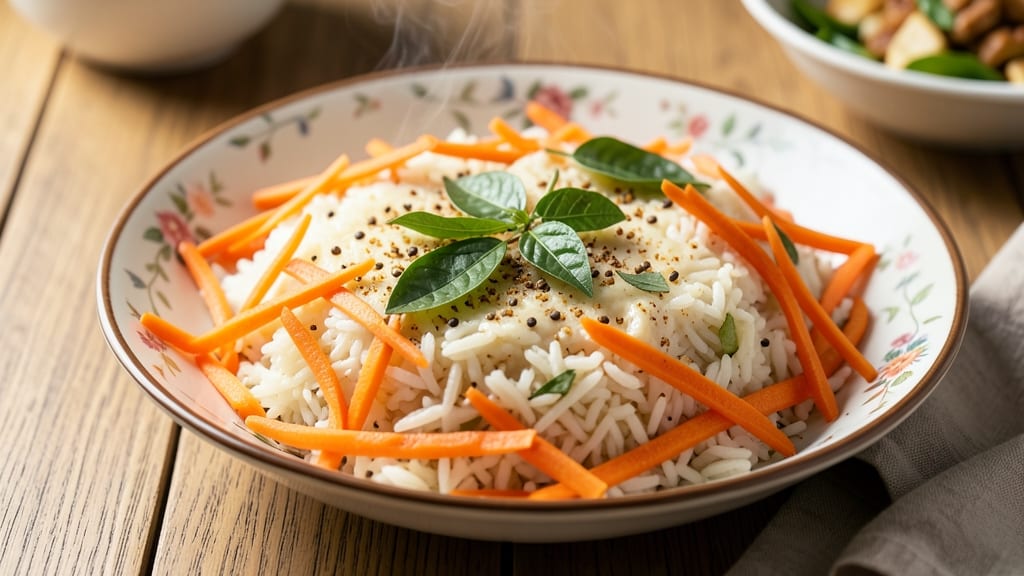
This carrot rice recipe in Tamil delivers the fragrant, turmeric-infused rice and delicate carrot threads that make it a beloved staple in South Indian homes. The secret lies in perfectly cooked rice with just the right texture—neither mushy nor hard—paired with sweet, thread-like carrots that melt in your mouth.
Whether served with sambar or coconut chutney, this dish brings the warmth of Tamil cuisine to your table with minimal effort but maximum flavor.
The recipe balances tradition with simplicity, using a precise rice-to-water ratio and a gentle tempering of mustard seeds, curry leaves, and asafoetida for that signature aromatic punch.
No special equipment is needed—just a pot, patience, and a few key ingredients to transform basic rice and carrots into a dish that feels like a hug in every bite. Ready to bring a taste of Tamil Nadu to your kitchen?
Ingredients for carrot rice recipe in tamil
Fragrant turmeric rice and delicate carrot threads create this beloved Tamil dish.
| Ingredient | Amount | Notes |
|---|---|---|
| Long-Grain White Rice 🍚 | 1 cup | Uncooked, rinsed thoroughly |
| Medium Carrots 🥕 | 2 cups | Peeled, cut into thin threads |
| Water 💧 | 2 cups | For rice cooking |
| Mustard Seeds 🌿 | ½ tsp | For tempering |
| Curry Leaves 🌿 | 8 whole | Fresh, slightly crushed |
| Asafoetida (Hing) 🌶️ | ⅛ tsp | Pinch for aroma |
| Turmeric Powder 🌿 | ¼ tsp | Freshly ground preferred |
| Ghee or Coconut Oil 🫒 | 2 tbsp | For tempering |
| Salt 🧂 | ½ tsp | Adjust to taste |
| Fresh Cilantro 🌿 | ¼ cup | Chopped, for garnish |
| Green Chili 🌶️ | 1 whole | Slit lengthwise, optional |
The rice is the foundation—basmati or long-grain white works best for that signature texture. Indian grocery stores often carry pre-washed rice, but rinse it twice if using regular white rice to remove excess starch. Carrots should be medium-sized, sweet varieties like Nantes or Danvers for the best flavor. Look for bright orange color and firm texture when selecting. The asafoetida (hing) is non-negotiable for that authentic South Indian aroma—find it in the international aisle of most supermarkets or any Indian grocery store.
No fresh curry leaves? Dried curry leaves at half the amount work in a pinch, but fresh gives that unmatched flavor. Short on ghee? Coconut oil is a perfect substitute—it adds that traditional taste. The green chili is optional but recommended for a subtle kick. If you can't find fresh cilantro, dried cilantro or parsley will work, though fresh is ideal. For the carrots, if you prefer thicker threads, cut them slightly thicker—just don't overcook them or they'll turn mushy. The rice-to-water ratio is crucial—stick to 1:2 for perfectly fluffy grains.
Rice keeps well for 3 days in the fridge, but the carrots are best served fresh. Store them separately if making ahead. For leftovers, reheat gently with a splash of water to restore moisture. This dish tastes even better the next day as flavors meld together. Garnish with extra cilantro and a sprinkle of turmeric right before serving for that restaurant-quality presentation.
Why You'll Love This Recipe
- Uses what you already have: rice, carrots, and spices most kitchens stock. Stays fresh for days in the fridge, and reheats like it’s fresh off the stove. Budget-friendly? Absolutely. Reliable? Even more so.
- No-Chop Nightmare: I swear by this—just slice the carrots into thick rounds, no julienne skills required. The mustard seeds and curry leaves pop in the pan while you rinse the rice, so it’s basically hands-off after that.
- Tamil Comfort in Bites: That first tempering of mustard seeds and curry leaves? Pure nostalgia. The carrots soften just enough to soak up the flavor without turning mushy, and the rice stays light—like my grandma’s version, but with half the effort.
- Lunchbox Hero: Pack this cold or at room temp—it’s foolproof for school lunches or office meals. The carrots hold their shape, and the rice doesn’t turn sticky. My kids actually eat their veggies with this (small miracle).
Step-by-step instructions for fragrant turmeric carrot rice
This traditional Tamil method transforms simple rice into a vibrant, aromatic dish with perfectly cooked carrot threads.
Cook the Rice with Turmeric and Salt
Rinse the 1 cup long-grain white rice thoroughly under cold water until the water runs clear. This removes excess starch that can make the rice gummy. Drain well and transfer to a heavy-bottomed pot.
Add the 2 cups water, 0.25 teaspoon turmeric powder, and 0.5 teaspoon salt. The turmeric infuses the rice with its signature golden color and subtle earthy flavor. Bring to a rolling boil over medium-high heat, then immediately reduce to low heat. Cover tightly with a lid and cook for 15 minutes without disturbing. The rice should absorb all the water and steam gently—this ensures fluffy grains rather than mushy ones.
Prepare the Carrot Threads
While the rice cooks, peel the 2 cups medium carrots and cut them into thin, even threads using a sharp vegetable peeler or mandoline. The thinner the threads, the more delicate and sweet they'll taste. Soak them in cold water for 5 minutes to prevent browning, then drain and set aside.
Real talk: if the threads aren't uniform, some will cook faster than others. For perfect doneness, aim for ¼-inch width—this ensures they soften without turning mushy. You'll add them to the rice later, so keep them separate until the tempering step.
Temper the Ghee with Aromatics
In a small pan, heat the 2 tablespoons ghee or coconut oil over low heat. Add the 0.5 teaspoon mustard seeds and let them pop and crackle for 30 seconds. This is your signal to add the 8 whole curry leaves and 1 slit green chili. The curry leaves should sizzle gently—if they burn, reduce the heat immediately. Cook for 1 minute until the mustard seeds turn golden and the leaves release their fragrant aroma.
Stir in the 0.125 teaspoon asafoetida (hing) last—it's potent and should dissolve completely into the oil. This step is the soul of the dish; the tempering (tadka) layers depth that no other ingredient can replicate. Keep the heat low to prevent burning the delicate spices.
Combine and Finish the Dish
Once the rice is fully cooked, fluff it gently with a fork and spread it evenly in a wide, shallow pan. Create a well in the center and pour the tempered ghee mixture into it. Mix thoroughly to distribute the spices evenly.
Add the drained carrot threads and toss everything together. The residual heat from the rice will gently cook the carrots in 2-3 minutes. You want them tender-crisp with a slight bite—this contrast with the soft rice is key. If the mixture looks dry, sprinkle 1 tablespoon water and fold it in.
Garnish and Serve
Remove from heat and let the carrot rice rest for 2 minutes—this allows the flavors to meld. Garnish with the 0.25 cup chopped fresh cilantro just before serving. The cilantro adds a bright, herbal finish that cuts through the richness of the ghee and the earthiness of the turmeric.
Serve immediately while still warm. Each bite should deliver perfectly cooked rice, sweet carrot threads, and layers of aromatic spices. For best results, pair with a yogurt-based raita or a simple cucumber salad to balance the dish's richness. The rice should be fluffy with individual grains visible, the carrots tender but still holding their shape, and the spices evenly distributed throughout.
Pro Tips For Making Carrot Rice Recipe In Tamil
- Parboil Carrots First: I learned this the hard way—raw carrots in rice water turn mushy and dull. Instead, blanch them for 3-4 minutes in boiling salted water before adding to the rice. They’ll stay tender-crisp and soak up flavors better, not turn into a sad, waterlogged pulp.
- Toast Mustard Seeds Low: Skip the high-heat drama—mustard seeds burn faster than you think. Start them in a dry pan on medium-low until they pop, then add oil. This keeps their nutty aroma intact and prevents that bitter smoke alarm moment.
- Rinse Rice Twice: One rinse removes surface starch, but two rinses (until water runs clear) guarantees fluffy rice. For carrot rice, this is non-negotiable—starchy rice turns gluey when mixed with cooked carrots, and nobody wants a gummy mess.
- Cook Rice Slightly Under: Take rice off the heat when it’s just done—about 1 minute before it looks fully cooked. The residual steam finishes cooking while absorbing the carrot flavors. Overcooking turns it into a sad, dense block. (Yes, even if you’re impatient like me.)
Storing and reheating your carrot rice recipe in tamil
Fridge Storage Tips
Store your carrot rice in an airtight container for up to 3 days in the refrigerator. The rice stays fluffy best when kept in a wide, shallow container—this prevents it from becoming compacted.
I like using glass Pyrex containers because they allow me to see the contents and reheat directly in the microwave if needed. The carrots hold their texture better when stored separately, so I keep them in a sealed bag inside the container. 💪
Freezer-Friendly Method
For longer storage, freeze portions in single-serving containers for up to 2 months. The rice-to-carrot ratio changes slightly after freezing, so add 1 tablespoon water when reheating to restore moisture.
I wrap the container tightly with plastic wrap before placing it in a freezer bag to prevent freezer burn. Thaw overnight in the fridge before reheating for best results.
Reheating on Stovetop
My favorite method is stovetop reheating—it preserves the dish's texture beautifully. Spread the carrot rice in a non-stick pan over medium-low heat and add 2 tablespoons water. Cover with a lid and heat for 3-4 minutes, stirring gently.
The residual heat from the pan will gently warm the rice and carrots without drying them out. Finish with a sprinkle of turmeric powder for that restaurant-quality aroma. 🔥
Microwave Perfection
For quick reheating, transfer the carrot rice to a microwave-safe bowl and cover with a damp paper towel. Heat on medium power (50%) for 2 minutes, then stir and continue in 30-second intervals until reaching 165°F.
Avoid high power—it can make the rice rubbery. A splash of water or coconut milk helps restore moisture if the dish looks dry.
Reviving Day-Old Rice
If your carrot rice has lost its fluffiness, don't worry—it's an easy fix! Spread it on a baking sheet and bake at 300°F for 5-7 minutes to dry out excess moisture. Then, reheat in a pot with 1 tablespoon ghee over low heat.
The ghee adds richness and helps restore that fragrant aroma. This trick works wonders for restaurant-style results at home. ✨
Carrot Texture Tips
If reheated carrots turn mushy, they were likely overcooked initially. For best reheating, keep the carrots separate from the rice when storing. Add them fresh when serving to maintain their tender-crisp texture.
If you must reheat them together, add 1 tablespoon water and cover tightly for 1-2 minutes on low heat. The goal is to warm through without losing that delicate bite. 🥕
Nutrition facts
Frequently asked questions
Why does Tamil carrot rice use thin carrot threads instead of diced pieces?
The delicate carrot threads are a signature of Tamil-style carrot rice! Thin threads cook faster and maintain their sweetness while adding a beautiful visual contrast to the fluffy rice. Diced carrots would release too much moisture and turn mushy, which disrupts the perfect texture balance. The thread-like appearance also makes the dish look more elegant when served.
Can I substitute basmati rice with jasmine rice for this recipe?
Yes, but with adjustments! Jasmine rice absorbs more water, so reduce the water by ¼ cup (use 1¾ cups instead of 2 cups). The grains will be slightly stickier, which works well for this dish. For extra fluffiness, rinse the rice 3 times to remove excess starch that makes jasmine rice clump together.
What's the secret to getting perfectly fluffy rice every time?
Three key steps: rinse thoroughly, use the right rice-to-water ratio (1:2), and never peek while cooking! After boiling, immediately reduce to low heat and cook covered for 15 minutes without lifting the lid. The steam creates fluffy grains. If your rice turns out sticky, spread it on a tray and dry it in the oven at 250°F for 5 minutes to restore texture.
Is asafoetida (hing) absolutely necessary for authentic flavor?
While hing adds that signature South Indian aroma, you can omit it if needed. For a substitute, use ¼ teaspoon garlic powder or a pinch of onion powder—though the flavor won't be identical. The mustard seeds and curry leaves still provide most of the aromatic punch. If you're sensitive to sulfurous smells, hing is the only ingredient that might cause reactions.
How do I make this dish gluten-free?
This recipe is naturally gluten-free! Just ensure your rice is certified gluten-free (some brands process with wheat). Check that your ghee or coconut oil contains no additives. The spices and carrots are all gluten-free ingredients. For extra safety, prepare the dish in a clean kitchen where no cross-contamination occurs with wheat products.