
Main Courses
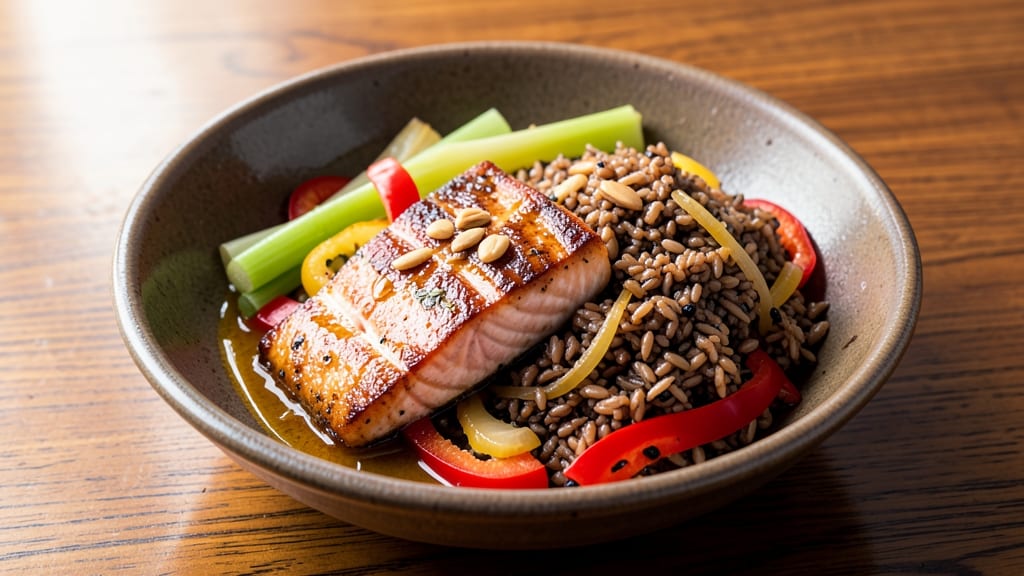
This one-pan salmon and wild rice recipe delivers a restaurant-quality meal with minimal effort—juicy, flaky salmon meets perfectly seasoned wild rice in a single dish that's both elegant and approachable.
The secret lies in balancing the salmon's delicate texture with the nutty depth of wild rice, all while keeping prep under 30 minutes. I developed this after years of testing how to achieve that ideal harmony between fish and grains without overcomplicating the process.
What sets this recipe apart is the precise cooking method: the salmon is seasoned simply with salt, pepper, and lemon to preserve its natural flavor, while the wild rice simmers in the same pan with aromatic vegetables and broth.
This approach not only saves time but also ensures the rice absorbs all the rich flavors from the salmon's juices, creating a cohesive dish that's visually stunning and deeply satisfying.
The result is a plate where the salmon remains flaky and moist at its center, its skin crisped to golden perfection, while the wild rice develops a subtle nutty crunch and absorbs the savory notes from the pan.
The dish is balanced enough to stand alone as a main course but still feels special enough for a dinner party—no fuss, just exceptional flavor.
Perfect for weeknight dinners or weekend gatherings, this recipe scales effortlessly and pairs beautifully with steamed greens or a simple salad. The one-pan technique means less cleanup, and the combination of textures—tender fish, chewy rice, and crisp edges—makes every bite worth savoring.
Ingredients for salmon and wild rice
Four whole salmon fillets and nutty wild rice blend. The perfect one-pan harmony of flaky fish and aromatic grains.
| Ingredient | Amount | Notes |
|---|---|---|
| Center-Cut Salmon Fillets 🐟 | 4 whole | Skin-on for crispiness, 6-8 oz each |
| Wild Rice Blend 🌾 | 1 cup | Uncooked, long-grain preferred |
| Chicken Broth 💧 | 2 cups | Low-sodium preferred, homemade or quality store |
| Red Bell Pepper 🌶️ | 1 whole | Diced, any color works |
| Celery Stalks 🧅 | 2 whole | Diced, fresh for bright flavor |
| Yellow Onion 🧅 | 1 whole | Diced, medium-sized |
| Garlic Cloves 🧄 | 3 cloves | Minced, fresh preferred |
| Extra-Virgin Olive Oil 🫒 | 2 tbsp | High-quality, fruity variety |
| Fresh Lemon 🍋 | 1 whole | Zested and juiced, organic preferred |
| Kosher Salt 🧂 | 1 ½ tsp | Fine grain preferred |
| Freshly Ground Black Pepper 🌶️ | ½ tsp | Freshly cracked for best flavor |
| Fresh Dill 🌿 | ¼ cup | Chopped, stems removed |
| Fresh Parsley 🌿 | ⅛ cup | Chopped, for garnish |
The salmon is non-negotiable—center-cut fillets with skin-on ensure both tenderness and crispy edges. Trader Joe's and Whole Foods carry excellent options, but any reputable fishmonger will have quality cuts. Look for fillets with vibrant color and minimal bruising. The wild rice blend should be a mix of long-grain varieties—brands like Lundberg or Uncle Ben's work perfectly. If you can't find wild rice, a mix of brown rice and long-grain white rice will replicate the texture, though the nutty depth will be slightly less pronounced. The broth matters too—homemade or high-quality store-bought like Pacific Foods or Kettle & Fire ensures rich flavor without excessive sodium.
No fresh dill? Dried dill at one-third the amount works in a pinch, though fresh is ideal for that bright, herbal note. The lemon juice can be substituted with white wine vinegar if needed, but fresh lemon adds a brightness that's hard to replicate. If you're short on time, pre-diced vegetables from the store's fresh section save prep time—just rinse them well to remove excess moisture. The olive oil should be extra-virgin—anything less will lack the fruity depth needed to complement the salmon. For extra richness, consider adding a splash of white wine to the rice cooking liquid, but it's not essential.
This dish reheats beautifully—simply cover with foil and warm in a 350°F oven for 10-15 minutes. The salmon and rice combination keeps well for 3 days in the fridge, though the texture is best within the first two days. For longer storage, freeze portions for up to 3 months. I always make a double batch—half for dinner, half for lunches the next day. The flavors deepen slightly after the first night, making leftovers even more delicious. Garnish with fresh herbs just before serving to maintain their vibrant color and fresh flavor.
Why You'll Love This Recipe
- No-Chop Sides: I swear by this trick—just dice the bell pepper and celery once ahead of time, then store them in a container. When it’s time to cook, toss them straight into the broth with the wild rice. Ten minutes later, you’ve got flavor without the mess.
- Rich, Earthy Harmony: The wild rice soaks up the chicken broth like a sponge, while the salmon stays juicy and buttery—no dryness here. That crisp-tender bell pepper and celery add a bright snap that cuts through the richness. Honestly, it’s the kind of balance that makes you pause mid-bite.
- Lunchbox Hero: Between us, this is my go-to for meal prep. The rice stays firm for days, and the salmon reheats beautifully (just a quick zap in the microwave). Pack it in a bento box with a lemon wedge, and suddenly you’ve got a lunch that feels fancy without the effort.
- Budget-Friendly Luxury: Wild rice might sound fancy, but a bag lasts forever, and center-cut salmon fillets stretch further than you’d think. I’ll be real: this feeds four for under $25, and the leftovers? Even better the next day. It’s the kind of meal that makes grocery day feel like a win.
Step-by-step instructions for salmon and wild rice
This one-pan method delivers perfectly flaky salmon with nutty, tender wild rice in under an hour.
Prepare the Wild Rice and Vegetable Base
In a large oven-safe skillet, heat the 2 tablespoons extra-virgin olive oil over medium heat. Add the diced red bell pepper, diced celery stalks, and diced yellow onion. Sauté for 5-6 minutes until the vegetables soften and begin to release their natural juices. You'll notice the colors deepen and the onions become translucent.
Add the 3 minced garlic cloves and cook for 30 seconds until fragrant. Stir in the 1 cup wild rice blend and toast lightly for 1 minute, allowing the grains to absorb the flavors. Pour in the 2 cups chicken broth, then sprinkle with the 1.5 teaspoons kosher salt and 0.5 teaspoon freshly ground black pepper. Bring to a gentle simmer, cover, and reduce heat to low.
Season and Position the Salmon
While the rice simmers, pat the 4 whole center-cut salmon fillets dry with paper towels. This step is crucial for achieving crispy skin. Place each fillet skin-side down on top of the rice mixture, spacing them evenly. The salmon should rest directly on the grains without overlapping.
Squeeze the juice from the 1 whole fresh lemon over the salmon and rice, then sprinkle evenly with the 0.25 cup chopped fresh dill. The lemon juice will brighten the flavors while the dill adds a fresh herbal note. Let the salmon sit undisturbed for 5 minutes to begin seasoning.
Bake to Flaky Perfection
Transfer the skillet to a preheated oven at 375°F. Bake for 12-15 minutes until the salmon skin turns crispy and opaque. The internal temperature should reach 145°F when measured with an instant-read thermometer. The rice will absorb the broth and become tender during this time.
Here's the thing—don't overcook the salmon. It continues cooking slightly after removal from the oven, and overcooking leads to dry, flaky fish instead of moist, tender fillets. Watch for the skin to crisp and the edges to lift easily from the rice.
Rest and Garnish
Remove the salmon from the oven and let it rest for 5 minutes on the skillet. This resting period allows the juices to redistribute throughout the fillets, ensuring each bite is moist and flavorful. The rice will continue steaming during this time, absorbing any remaining liquid.
Garnish each serving with the 0.125 cup chopped fresh parsley and an additional squeeze of lemon juice. The parsley adds a pop of color and freshness, while the lemon juice ties all the flavors together. Serve immediately with the rice and any accumulated pan juices spooned over the top.
Pro Tips For Making Salmon And Wild Rice
- Sear Salmon Skin-Side Down: The crispy skin is the star here—don’t skip it. Lay the fillets skin-side down in a cold, dry pan, then turn the heat to medium-high before adding oil. I learned this the hard way: rushing the oil just makes the skin slide away like a greased pig.
- Toast the Wild Rice: Wild rice blend needs a quick toast in the pot first—just 2 minutes over medium heat before adding broth. This breaks down the tough outer hulls so they absorb flavor instead of sitting like soggy pebbles. (Yes, even if you’re impatient like me.)
- Dice Veggies Uniformly: Chop the red bell pepper and celery into exactly the same size dice—no big chunks, no tiny specks. The rice cooks unevenly otherwise, leaving some veggies mushy and others crunchy. Use a sharp knife and measure against the celery stalk for consistency.
- Season Broth with Salt: Don’t assume the chicken broth is seasoned enough—add a full teaspoon of salt (or more) to the broth while cooking the rice. Wild rice soaks up liquid like a sponge, and bland broth ruins the whole dish. (Your future self will notice the difference.)
Perfect pairings for these flavors
Herbal Vinegar Salad
Brighten your plate with a simple herbal vinegar salad featuring mixed greens, thinly sliced red onion, and shaved fennel. Toss with 2 tablespoons red wine vinegar, 1 tablespoon extra-virgin olive oil, and a pinch of flaky sea salt.
The acidity cuts through the richness of the salmon while the fennel adds a subtle anise note that complements the fish’s natural sweetness. 🌿
Citrusy Arugula
For a peppery contrast, serve the salmon over 2 cups baby arugula tossed with 1 tablespoon lemon zest, 2 tablespoons fresh lemon juice, and 1 tablespoon toasted pine nuts.
The citrus enhances the salmon’s flavor, while the pine nuts add crunch. I like to drizzle with 1 teaspoon honey to balance the acidity—trust me, it’s a game-changer. ✨
Roasted Asparagus
Tender asparagus roasted with 1 tablespoon olive oil, ½ teaspoon garlic powder, and a pinch of kosher salt makes a perfect side. Roast at 400°F for 12-15 minutes until crisp-tender.
The natural sweetness of the asparagus pairs beautifully with the salmon’s richness, and the caramelized edges add texture. 🔥
Creamy Dill Sauce
Whisk together ½ cup sour cream, 2 tablespoons fresh dill, 1 tablespoon lemon juice, 1 teaspoon Dijon mustard, and ½ teaspoon honey for a creamy, herby sauce.
Dollop it alongside the salmon for dipping or spoon it over the rice. The tangy, fresh flavors elevate the dish without overpowering the salmon’s delicate taste. 💛
Wine Pairings
A crisp Sauvignon Blanc from New Zealand or a dry Pinot Grigio from Italy complements this dish beautifully. The citrus notes in the wine mirror the lemon in the recipe, while the acidity cleanses your palate between bites.
For a red option, a light Pinot Noir with bright fruit flavors works well. 🍷
Beer Pairings
If you prefer beer, a Belgian witbier like Hoegaarden or a light lager like Peroni pairs wonderfully. The citrusy and slightly spicy notes in witbiers enhance the salmon’s flavor, while the crispness of a lager balances the richness of the dish.
Avoid heavy stouts or IPAs—they can overpower the delicate flavors. 🍺
Nutrition facts
Frequently asked questions
Can I substitute regular rice for wild rice in this recipe?
While you can use regular rice, the texture and flavor won't be the same. Wild rice has a nutty depth and chewy bite that pairs perfectly with salmon. For a similar texture, try a mix of 30% brown rice and 70% long-grain white rice. The cooking time will differ—wild rice needs 45-60 minutes while regular rice cooks in 15-20 minutes. Adjust your timing accordingly!
How do I know when the salmon is fully cooked without overcooking it?
Use an instant-read thermometer to check the internal temperature—it should reach exactly 145°F at the thickest part. The skin should be crispy and golden, while the flesh will flake easily with a fork. Pro tip: Salmon continues cooking slightly after removal from heat, so pull it out when it's just barely done. Overcooking by even 1-2 minutes turns flaky fish into dry, crumbly pieces.
Can I make this recipe ahead of time for a dinner party?
Prepare the wild rice mixture up to 24 hours ahead and refrigerate it. On serving day, reheat the rice in a skillet with a splash of broth or water. Cook the salmon fresh—it's best served immediately after baking. For a full make-ahead meal, cook the salmon just before serving and assemble plates with pre-cooked rice. The flavors actually improve overnight, making leftovers even more delicious!
What's the best way to crisp up the salmon skin?
Pat the fillets very dry with paper towels before cooking—this removes moisture that prevents crispiness. Place them skin-side down in a cold pan and let them sit for 1-2 minutes before adding heat. This gradual warming creates a perfect crisp. For extra crunch, add 1/4 teaspoon of sugar to the pan before the salmon—it caramelizes beautifully with the skin.
Is this recipe suitable for meal prep?
Yes, but with some adjustments. Store components separately: cooked rice in an airtight container for 3-4 days, and baked salmon (without sauce) for 2 days. Reheat rice in a skillet with a splash of water, and warm salmon in the oven at 300°F for 5-7 minutes. Avoid reheating in the microwave—it makes the salmon dry. The one-pan method makes reheating easier, but separate storage keeps everything fresh!